
Thank you for visiting HOJO website. If you have any enquiry, please feel free to get in touch with us at

▼ Akira Hojo
▼ Hojo Newsletter
▼ HOJO FACEBOOK





HOME > Scented Tea > Jasmine Pearl
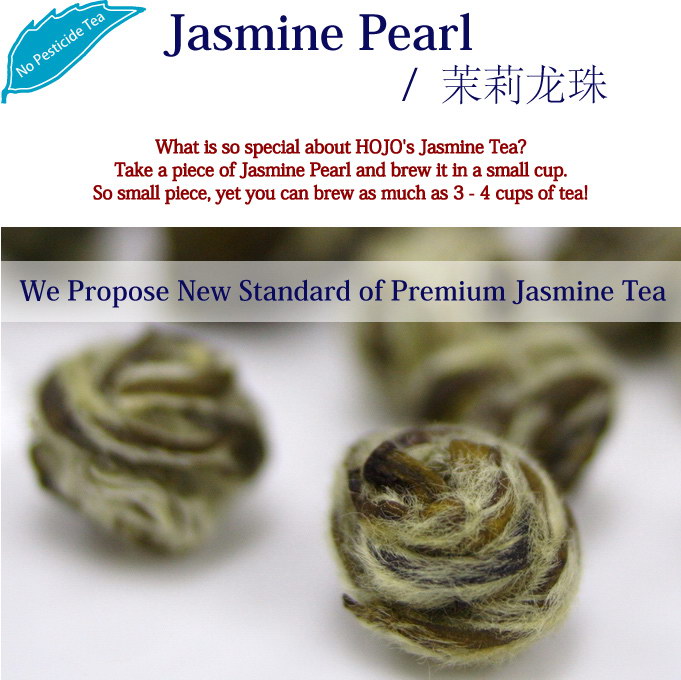
This is the first time for Malaysian to experience this quality. This tea was originally developed for the European high-end market.
There are 3 characteristics as follow:
Although this tea was meant for the high-end market, it is very casual and easy for anyone to enjoy.
This is the tea you should try first in our various lineups.
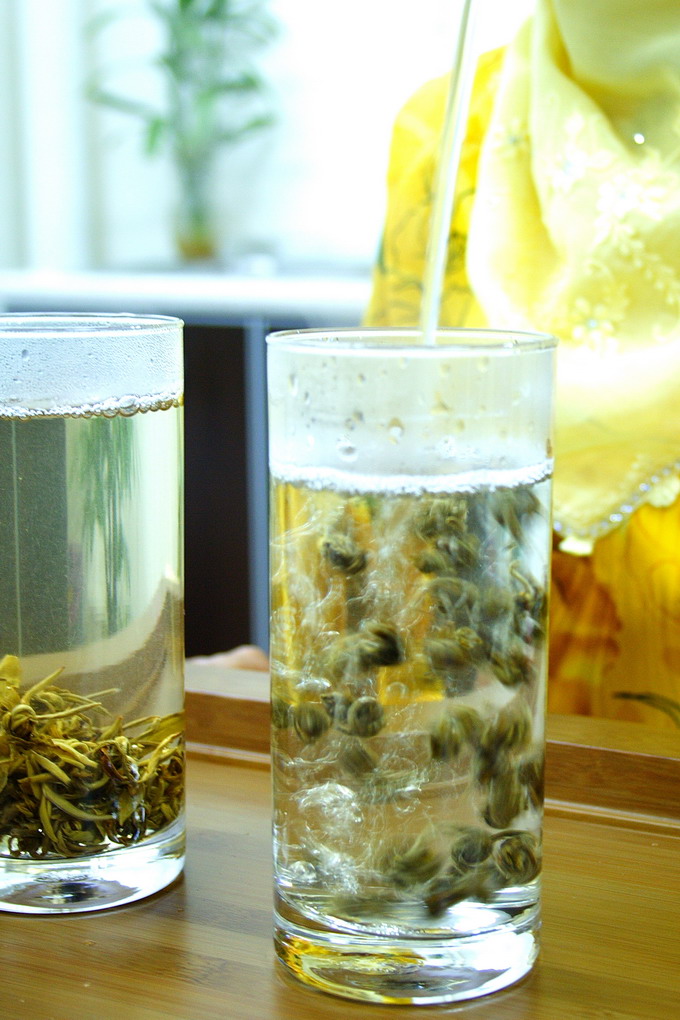
Initially we often hear, " Why is it that a Japanese company is selling Chinese Tea?"
But on the other hand, we also received the following feedback from the customers who have tried our tea:
Despite the fact that there are so many Jasmine Tea in the market, our customers are always surprised by its excellent quality which can be rarely found elsewhere.
We have also collected some opinions from Japan which are as as follows:
HOJO'S Jasmine Tea is an excellent and wise choice to make when buying the Jasmine Pearl. You can most surely smell the flowers as thouh it is right in front of you.! Plus it can withstand up tp 5-6 brewings.
Economical as Premium TeaThe tea leaves used for one brewing which is about 3g will last up until the 5th brewing. Considering it costs RM88/100g, the cost for 3g is only RM2.64 In other word, the cost for a single brewing that equivalent to 200ml is RM2.64/5 brewing = RM0.528 For this money for value price, you can enjoy the world's top class Jasmine Tea at home. Tea leaves are from the IMO (Switzerland Certified) organic tea garden. So you can even enjoy this tea safely with your children! |
Best Tea is from Fujian and Best Jasmine Flower is from GuangxiThe weather of Guangxi is suitable for Jasmine. Therefore, Government goes to great lengths on the development of Jasmine plantation. Nowadays it is considered as Jasmine = Guangxi HOJO selects the best grade of Jasmine available in Guangxi |
In oder to enjoy Jasmine Tea, you do not need any special tea ware.
All you need is a long glass. Using simple long glass anyone can easily brew Jasmine Tea.
|
|
|
||
|
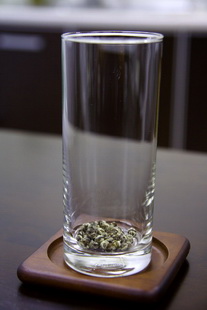
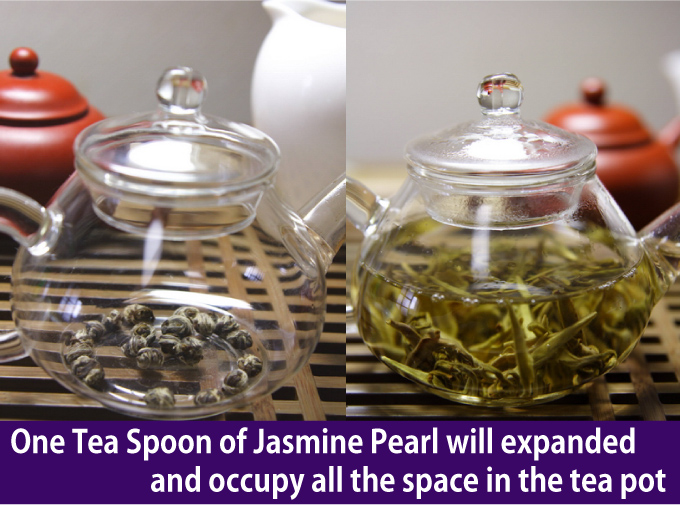
3g which is just to cover the bottom of the long glass |
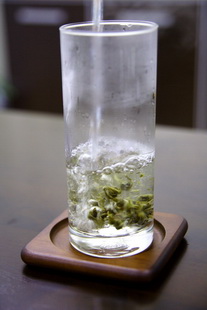
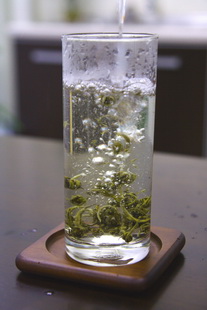
Pour the hot water (85-90 Degree Celsius) into the Long Glass |
Tea leaves start opening as the hot water is being poured |
||
|
|
|
||
|
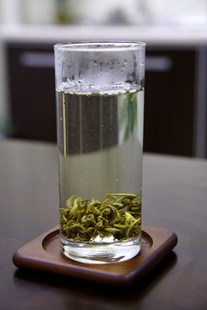
Green buds begin to appear |
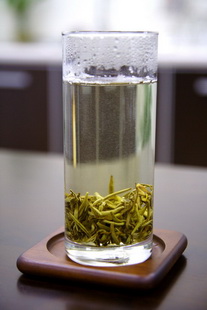
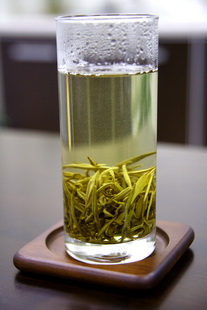
The leaves are expanding |
Approximately, after 3 minutes, it is ready to drink |
Many customers who looked at our Jasmine tea usually said that " I know this tea".
I believe that "Many customers think that Jasmine tea is round in shape and is of the same kind."
However do you know that those "Pearl Shape" Jasmine Tea is produced all over the world such as China, Taiwan, and even in India.
Perhaps there are more than a few hundred companies who produce a similar product. All of them looks the same "Pearl Shaped".
In fact, shape does not tell its quality. There is a huge difference when it comes to price. The reason of making Jasmine tea into pearl shape is for the efficiency of mixing.
By making green tea into the similar shape as Jasmine flower, they can be mixed very well and tea leaves could be scented throughly. However the essential factor for the quality comes from the raw material that is being used, the processes involved and many other factors.
We can not just judge its quality by the appearance.
The left = HOJO's Jasmine and Right = Jasmine purchased from ordinary specialty tea shop.
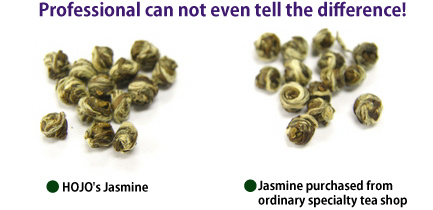
Honestly speaking, even professionals can not really tell the difference from the above photo.
However you can defenitely tell the difference when you experience its flavor and taste. Brewed tea tells more than its look.
Let us explain the difference in detail
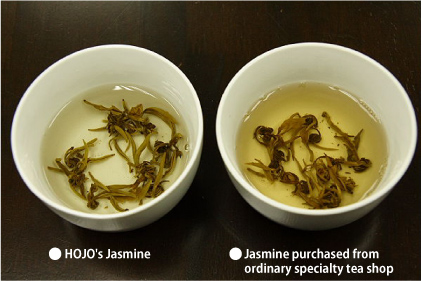
At first there is a significant difference in color. HOJO's Jasmine shows bright and a light yellowish color while Jasmine bought from a tea shop shows it dark and brownish yellow in color.
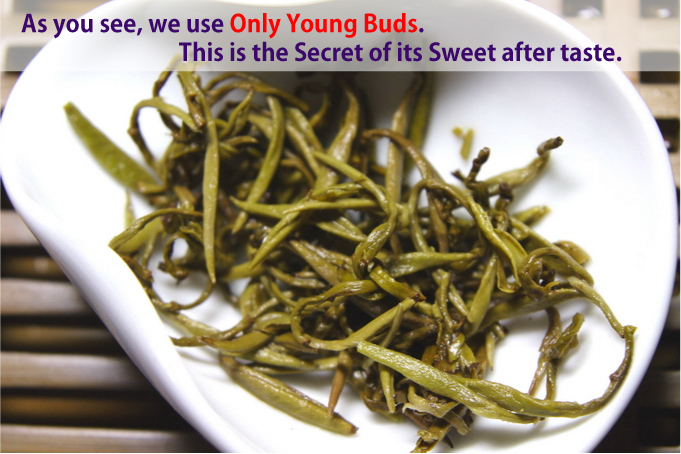
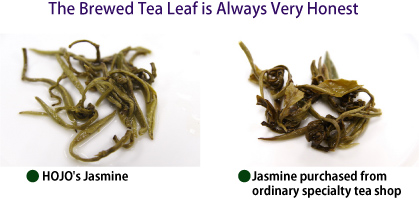
You can also see the significant difference in the brewed leaves. The HOJO's Jasmine shows a consistent green color while other jasmine shows brownish spots within some broken parts and generally is in dark green in color. Those brown spots indicate rough handling of tea leaf during harvesting and process.
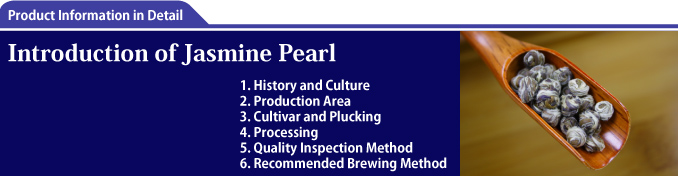

The Jasmine flower originated from Iran (formerly known as Persia). It has been planted in China mainland for more than 1700 years; it is said that this flower was brought to China during Tang Dynasty through the Silk Road. In the very early stages, it was only served for decorative purposes. The history of making flower tea using jasmine started during the South-Song Dynasty (南宋 Nan-Song, at around 1240) at Guangdong province. During Ming Dynasty (明代 Ming-dai), the technique of scenting tea with jasmine had been well-developed. Details of the scenting process had been recorded, including selection of raw material, quantity of flower used, number of scenting process, drying, etc. The commercial mass production of Jasmine tea emerged during the Qing Dynasty, at Fuzhou (福州) of Fujian province. In year 1900, the production of jasmine flowers at Fuzhou reached 1,500 tones. During its most flourishing period (1928-1938), the quantity of jasmine tea being produced was more than 7,500 tones per year. By the end of the 19th century, the foreign traders started to set-up tea shops at Fuzhou, and jasmine tea had became one of the trading items to overseas.
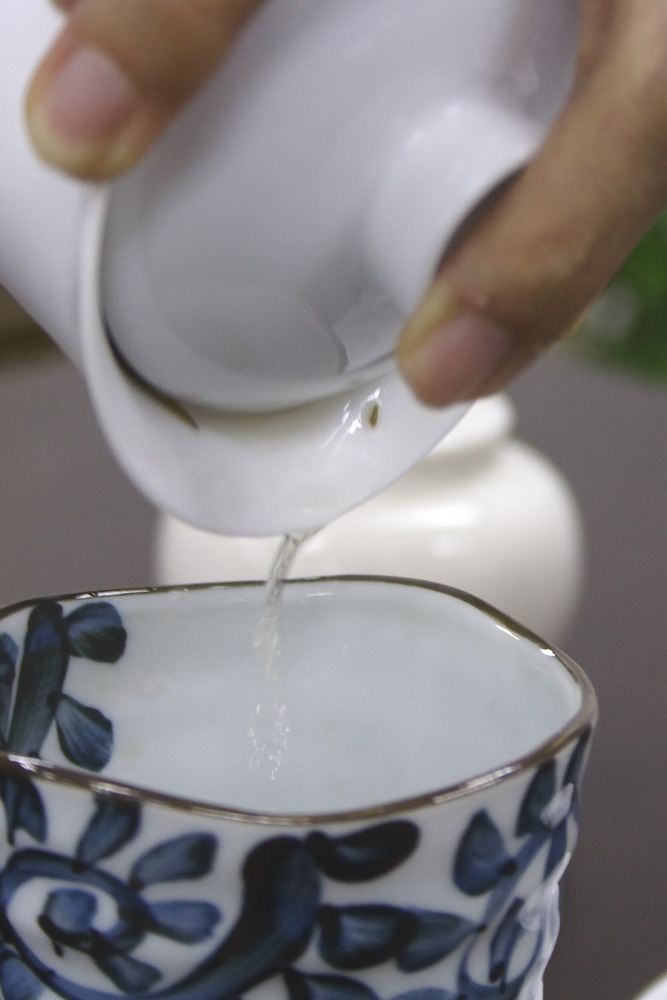
The increased popularity of jasmine tea gave impetus to the massive production from the Southern part spread to the Northern and East, i.e., Zhejiang (浙江), Jiangsu (江苏), Sichuan (四川), Hunan (湖南), Guangxi (广西) and Yunnan (云南) Province. However, at Jiangsu, Zhejiang and other northern provinces, the jasmine flower could not survive under the cold weather during winter; the flowers were planted in pots and needed to be transfered indoors to a warmer temperature. This increased the cost of production and impeded the immense development at Jiangsu and other provinces located at the north.
Other than mainland China, the fragrance of jasmine had even drawn the attention of tea merchants in Taiwan. As early as year 1873, they started to ship tea leaves to Fuzhou at Fujian Province to process into jasmine tea. Later, in year 1882, Taiwan tea merchants brought back the jasmine seeds and cultivated it in their island: they started to produce jasmine tea on their own. Until year 1939, the yield of Taiwanese jasmine flowers reached 1300 tones per annum. However, due to the influence of sea-island climate, the fragrance of jasmine flower gives a less refreshing note as compared to the one produced in China.
Since year 1980, the state government of Guangxi Province made the utmost effort to develop the production of jasmine flowers. At the same time, the Commercial Department appointed Heng County (横县 Heng-xian) at Guangxi as the new base for the production of jasmine flowers. This has promoted the enormous development, and today, Guangxi has the widest and renowned jasmine garden, and the largest jasmine tea processing area is located at Heng County in Guangxi Province.
The jasmine flower is native to tropical and warm temperate regions with average atmospheric temperature above 20˚C. By far, Heng County at Guangxi Province has proven to be the most suitable place for the jasmine flower. This area is located at the sub-tropical monsoon climate zone. With this climate, the jasmine plant can easily over-go the winter without being frozen and ruined by the cold stream. The sufficient rainfall and sunshine is favorable to the growth of jasmine flowers. During the blossoming period, the atmospheric temperature which is above 25˚C is favorable. Besides, the soil condition is rich in organic substances which ensure exuberant growth of plant. The jasmine plantation is located at the flat ground and hillside with good drainage and receives sufficient sunlight. The florescence of jasmine starts earlier and lasts for a longer period of time than other areas, and the yield is higher. Besides, the naturally fertile soil condition gives rise to the flower bud which is bigger and gives a stronger fragrance. This can effectively reduce the quantity of flowers used for scenting; e.g., the amount of flowers used is only 70% compared to other areas.
The tea leaves used to make this jasmine pearl comes from the organic tea garden located at Ningde City (宁德市 Ning-de Shi) at Fujian Province. At Ningde City, the organic tea garden covered up to 70% of its total tea garden found here. This naturally preserved area is surrounded by several mountains. Besides, there are at least 24 main river streams crossing this area at various locations. Subsequently, the tea growing area is surrounded with fog throughout the year. One of the essential factors for good green tea is its mellow taste. This taste originates from amino acid called theanine. Young buds contain high levels of theanine, but it is converted to polyphenol such as catechins when tea leaves receive sun light. On the other hand, less sunshine will preserve high levels of theanine in the leaf as bio-conversion is not effectively taking place. Other than giving the mellow taste due to the substance contained in leaf, the optimum growing environment produce more fleshy buds and leaves, which gives a more refined outlook when rolled into pearl shapes.
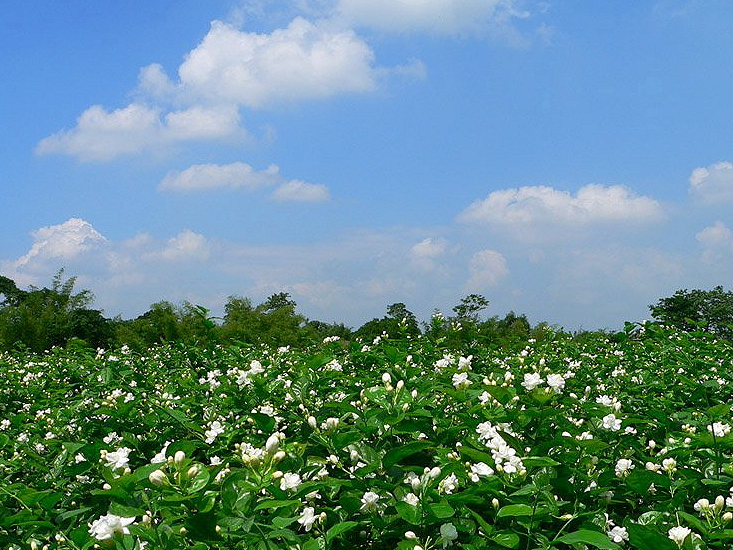
There are several jasmine cultivars planted in mainland China. In general, there are three main categories referring to the structure of flower petals. Hojo’s Jasmine Pearl is particularly scented with Double-Petal Jasmine flowers to obtain its natural intense fragrance.
In the early stage (before year 1963), this is the main cultivar planted for the production of jasmine tea The flowers blossom at an earlier hour (6-7 p.m.) as compared to the Double-petal jasmine (at 8-9 p.m.). This cultivar gives a fresh note of bouquet and with a refreshing taste to the jasmine tea. However, the yield is much lower (1400-1750 kg/acre, 2800kg/acre at maximum), as compared to Double-petal jasmine (3500-5600 kg/acre, 10500kg/acre at maximum). Besides, this cultivar is susceptible to plant disease and is not able to bear the cold weather and water logging condition during the rainy season. These factors are unfavorable to the overall performance although it gives a good fragrance.
Due to the above factor, other cultivar was developed and up to date, the Double-petal jasmine is the main cultivar being planted at most of the flower gardens. Other than producing a much higher yield of flowers, it can withstand harsher weather conditions and environment, and it is easy to plant. Besides, this cultivar gives a stronger and more intense fragrance. It is favorable for the production of jasmine.
After plucking, the flowers will blossom at 7-8 p.m. Usually the 1st and 2nd outer layer of petal will blossom, and the rest of petal may blossom on the next day, or even sometimes never blossom but shrivel. The full blossoming of flowers will drag for many hours, and gives a milder fragrance. However, the yield is lower. Therefore, this cultivar is not suitable for the production of jasmine tea and less is being used.
The flowering season of jasmine vary in accordance to different areas due to the variance of atmospheric temperature. In general, there are four main seasons:
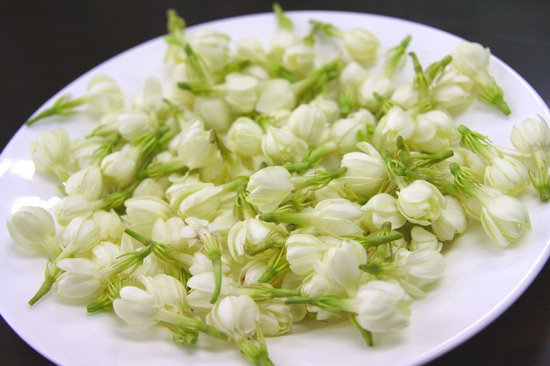
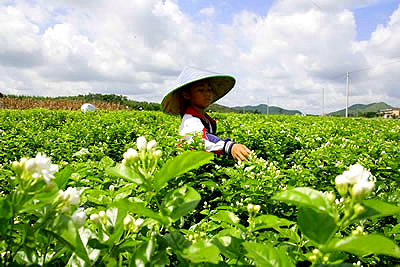
During spring, due to the lower temperature, and less accumulation of nutrition in plant, the yield is lower and of inferior quality. During early spring and late autumn, the flower is rather small with a yellowish color and hardly blossoms after plucking; it is not suitable for the scenting process. The best season for jasmine flower falls during summer until late summer. At this time, the temperature is higher, and there is sufficient sunlight and rainfall. These factors are favorable for the jasmine plant to produce more flowers with bigger buds and of superior quality.
The plucking of jasmine flower is meticulously carried out in order to collect the right flower. The standard is set based on whether the flower plucked is able to blossom at night. The criteria must be as follows:
Ningde is known as the Kingdom of Tea Cultivars; here , it contains up to 11 cultivars of National Standard, with another 14 cultivars of Province Standard. In particular, Fu-yun No.6 (福云6号) and Fu-ding Big-white down (福鼎大白毫 Fu-ding Da-bai-hao) is the main cultivars used. For these cultivars, the budding occur at earlier stage compared to others and have a higher budding rate. The Fu-yun No.6 gives more fleshy leaves, while the Fu-ding cultivar has a more fleshy and robust bud that is covered with a lot of white down. With these factors, the pearl formed gives a more distinctive appearance in addition to its taste.
The plucking of fresh tea leaves starts during March. Usually, one bud with two or three leaves is hand-plucked. After plucking, the leaves are transferred to a cool place indoors . The leaves are then spread to a thin layer. It must be carried out with much care and attention so as not to cause damage to leaf (damaged leaf will turn red and affect the quality of the end product). During this period, water vaporized from the fresh leaves is reduced to about 70%. The spreading causes the leaves to omit greenish grassy smell, reduce the bitter and astringent taste, increase amino acid concentration which improves the briskness of liquor.
The process involves intensive manual process to obtain the jasmine pearl. The green tea is processed at early spring and kept until the jasmine flowering season comes, i.e. starting from June onwards. The scenting process involves meticulous care to preserve the flower in order to obtain its divine fragrance into tea leaves.
Premium Jasmine tea is in its pearl shape. Do you know the reason why it has to be in this shape?
Tea leaf is made into the pearl shape which is the similar size and shape of jasmine flower so that when they conduct the mixing, tea leaf and jasmine flower could be very well mixed and the leaf could be effectively scented.
After plucking, the tea leaves will undergo 4 main processes:
At this first drying step, the leaf is dried using machine to a moisture content of 30%, then spread and cooled down.
After cooling, the leaf is proceeding for hand-rolling process. Intensive manual work is done to roll the leaf into the pearl shape. In a day, even an expert can only manage to roll as much as about 2kg of pearls.
The formed pearl will be dried using the machine. Two steps of drying are carried out: the 1st drying at 110-120˚C, followed by 2nd drying at lower temperature, i.e., 95-105˚C. The semi-finished tea contains about 7% of moisture.
The dried pearls will be kept until the florescence season of jasmine flower. During the storage, the water content of pearl must be controlled below 9%, and keep in air-tight condition and prevent from direct sunlight and humid environment.
Before the scenting process, the tea leaves must be re-conditioned:
Pearl will be carefully separated according to different sizes. Besides, it is sifted in order to remove broken pieces, tea dust or flakes
The semi-finished tea will be dried in machine heated to 100-110˚C and reduced the moisture to 4-4.5%. The lower temperature is used to prevent the leaves become burnt and affecting the quality of made tea. The purpose of re-drying is to vaporize the excessive moisture trapped in leaves during the storage time. It helps to eliminate the unpleasant stale flavor from leaves.
After the drying, usually the temperature of pearl is at 60-80˚C. The dried pearl will be spread out and cooled down to temperature which is 1-3˚C higher than ambient temperature. If the pearl retains higher temperature, it will affect the scenting process. The blossom of jasmine flower is very sensitive to changes of temperature and lower temperature is favorable.
The freshly plucked flower must be well-taken care of following several steps:
During the transportation of flowers to the factory, the temperature of flowers are gradually increased up to nearly 38?C due to stacking and respiratory effect of flower. This is unfavorable to the physiological activity of flowers and will affect its blossom at the later stage. The flowers must be spread to a thin layer with a thickness of 10 cm for cooling down. If the flower is plucked after the rain, it has to be spread to an even thinner layer and blown with fan to accelerate vaporization of water.
The purpose of curing is to strictly control the temperature of piled flowers. This is the critical step to ensure the quality of the blossoms. Jasmine flower is sensitive to changes of temperature when it blossoms. The optimum temperature is 32-37?C. If the temperature of piled flowers is lower than 30?C, it is stacked to a thicker layer to keep-up the temperature up, whereas the flower is spread to a thinner layer when the temperature is above 38?C. During spring and autumn, the room temperature is lower. Usually the flowers are piled up to 30-40cm and even covered with cloth in order to keep-up the temperature.
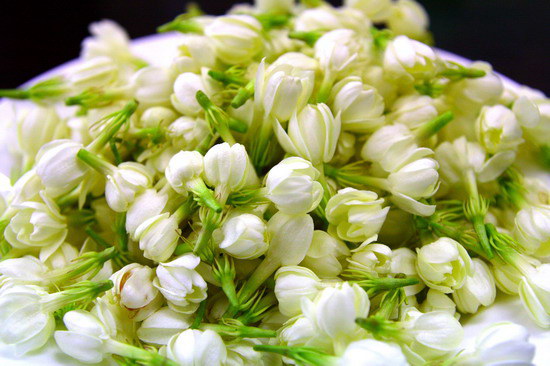
When 60% of the flowers bloom, sieving is carried out. The purpose of sieving is to separate the flower according to its different size. Besides, it also removes the green bud and stem. Only the flower with the right size will be collected and used. This is important to ensure the blooming occur simultaneously during scenting.
|
|
This is the critical step in the scenting process which affects the quality of finished product. There are six crucial factors:
The quantity of flower used is related to the grading of end product. In general, the higher grade used more flower than lower grade. In order to produce 100kg of special grade jasmine pearl, the total of 100 kg of flower will be used. The 100kg of flower is divided for 4 times of scenting: 1) First scenting – 38 kg, 2) second scenting – 30 kg, 3) third scenting – 26 kg, 4) final scenting – 6 kg. For first grade, 3 times scenting is carried out without final scenting, and the number of scenting is reduced when for lower grade. For 4th grade and above, the tea is first scent with waste flower (花渣 Hua-zha) collected from the final scenting of other high grade tea.
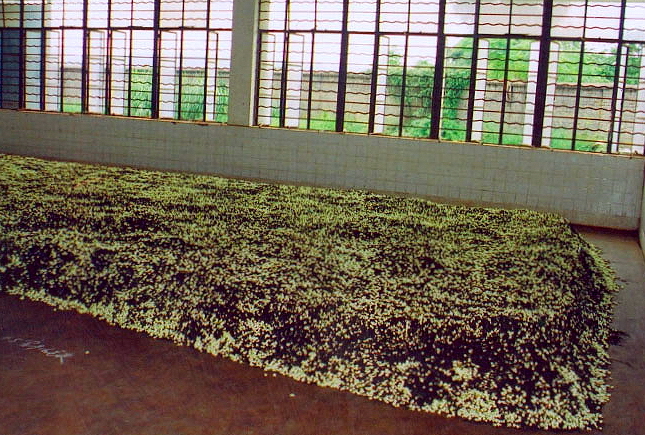
The whole process of mixing is carried out manually. At first, the total quantity of tea and flower is separately divided into 3 – 5 portions. The first portion of tea will be spread to a layer with thickness of 10-15cm, and then the first portion of flower will be scattered on top of tea. This is repeated layer by layer.
When it is done, the worker will use the harrow to separate and blend the mixture, and leave it for 5 – 6 hours before the ventilation step.
The purpose of ventilation is 1) to reduce the temperature of mixture, 2) provide oxygen to flower for continual blooming, 3) release the carbon dioxide and others from mixture. The worker will use the harrow to rake and spread the mixture to thickness of 10-15cm. It is repeated every 15 minutes and continues for 1 hour. When the temperature of mixture dropped to about 33-38˚C, the mixture will be piled again to the thickness of 30cm and leave it for 5-6 hours again. At times, second ventilation is necessary if the temperature of piled mixture rise to around 40˚C again.
In total, the scenting process takes 10-12 hours. When the temperature of mixture increase > 40˚C again, the flower became shriveled and turned to yellowish color, and not producing the fragrance, it is time to remove the flower.
Once the scenting is accomplished, the exhausted flower must be removed immediately. If delay, the flower became stewed and giving the unpleasant smell to tea. The timing of separating the flower must follow the rules:
1) When the temperature of piled mixture reached 41˚C in first scenting, 40˚C in second scenting, and 38˚C in third scenting, respectively.
2) When the moisture content of piled mixture reached 17-18% in first scenting, 13-14% in second scenting, and 11-12% in third scenting, respectively.
After the first scenting, the tea is dried in order to reduce the moisture content. The temperature of drying is depends on the number of scenting:
After drying, the temperature of tea must be reduced to < 40˚C. Tea is then ready for subsequent scenting process (转窨 Zhuan-yin, means repeat scenting).
This is one of the secrets that give the very genuine fresh flowery note to the tea. The final scenting is carried out in order to increase the intensity of jasmine fragrance, and adding the natural and refreshing flowery note to tea. Only the top grade of jasmine flower is used: with big petal, white color, and strong fragrance. For every 100 kg of tea, the flower used is 6-8 kg, depending on the moisture content of tea. In order to preserve most of its fragrance, the tea will not be dried after final scenting. Therefore, the moisture content of tea prior to final scenting is checked, and the quantity of flower used is calculated. The mixture is well-blended and piled for 6-8 hours. The moisture of final product is controlled below 8.5%. Exhausted flowers are removed once the scenting is accomplished, and jasmine tea will be packed into carton.
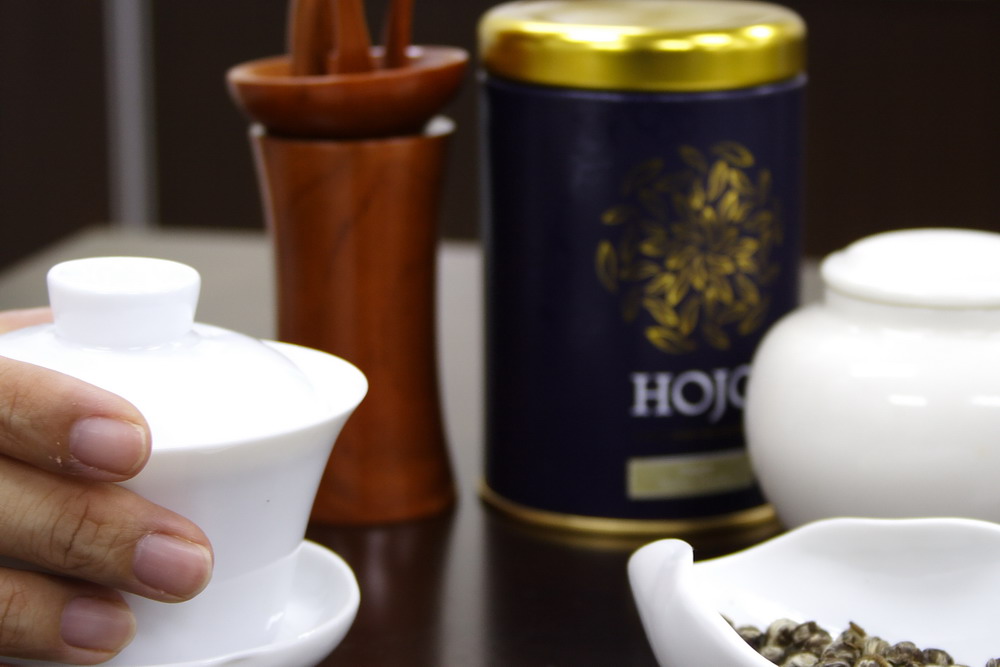
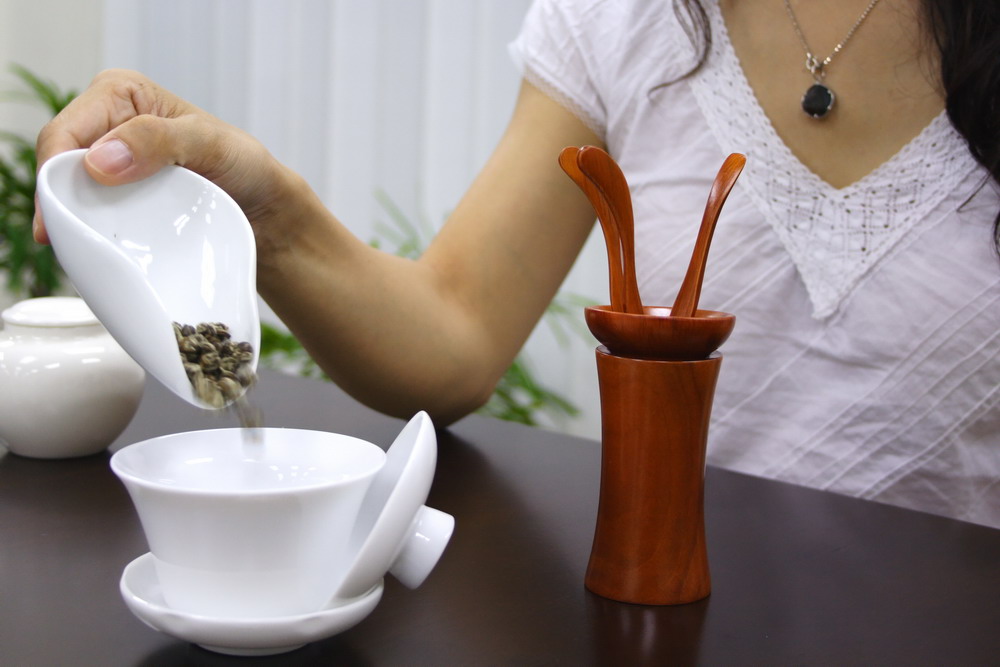
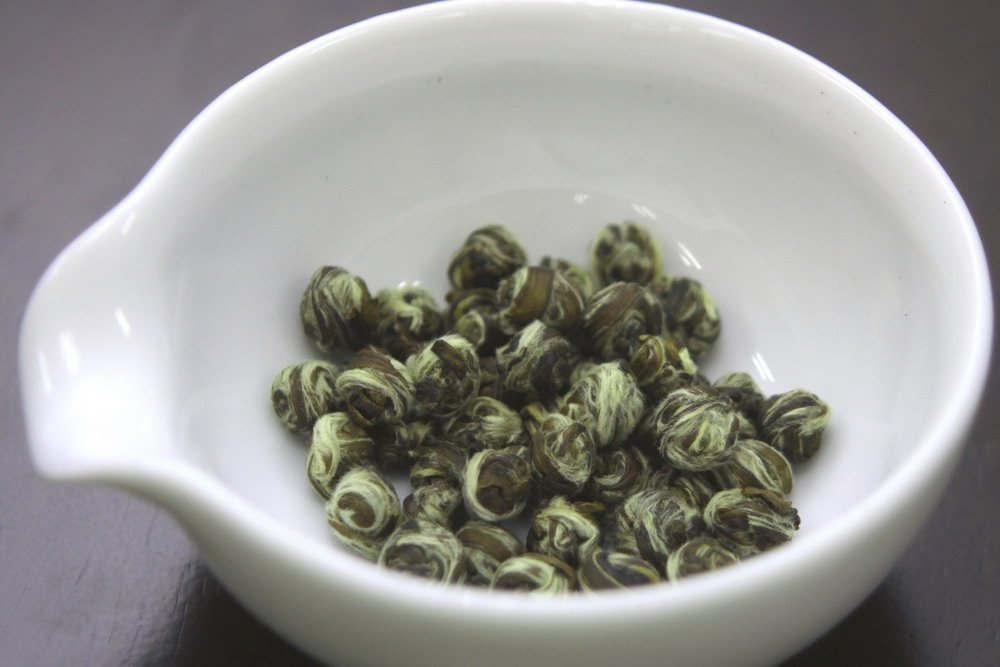
Tightly rolled into round shape. Each pearls streaked with silvery white downy buds. It is weighty and solid.
Leaf is pale green in color, and covered with a white down.
This is referring to the shape and appearance. Good quality tea consist of pearls of a fairly even size which is tightly rolled, with similar color. At lower grade, the tea contains pearls of varying sizes and shapes, some are loosely rolled or unfolded, while some are tiny pearl. Besides, the color of pearls are mixed between pale green and dark grayish color.
Good quality Jasmine Pearl scarcely contain dried jasmine flower petals. When the petals' fragrance has been exhausted, the spent petals are removed from the final product, as the flowers are completely dried and contain no aroma. The petals simply add visual appeal, and the quantity of flower is No indication of the quality of the tea. Few petals may remain; it is unavoidable. It is recommended to remove before brewing. The exhausted flower is not in white color but yellowish brown color, gives an unattractive appearance when it swell and expand in hot water when brewed, and also it may gives unpleasant smell to the tea. In addition, the dried flower indicating the quality of flower used: good quality is in white color, clean and bright, whereas flower of poorer quality is always in yellowish brown color with dark and dull appearance. Besides, the well-made tea must be free from extraneous matter such as fiber, bamboo or wooden flakes, sand or stone and dust. It also should not contain other tea plant derived object, such as seed or flakes.
Dry leaf gives a fresh, sharp and intense jasmine fragrance which is like a pure and natural bouquet. The jasmine tea of poor quality is lacking in freshness, flowery fragrance, while giving moldiness smell of jasmine flower. It is due to the improper processing whereby the temperature during scenting is not controlled and scented flower is not separated at once. When brewed, the liquor gives the same aromatic profile. For good quality flowers, the jasmine fragrance will last up to 3 brewings while its pleasing scent still remains in the brewed leaf. As for poorer quality flowers, the jasmine fragrance is hardly retained after the first brewing.
When brewed, the tea produces liquor with clear, luster and bright amber color. If the tea is of poor quality, the color is yellowish brown color, dull or in dark yellow/brown color.
Smooth with a refreshing note, thick, and mellow taste is lingering on tongue and mouth, and giving sweet after taste. It is different from the commercial versions of this famous tea which is often giving harsh astringency and roughness; sometimes it gives thin and flat taste. A good quality tea gives a lingering taste up to 3 brewings.
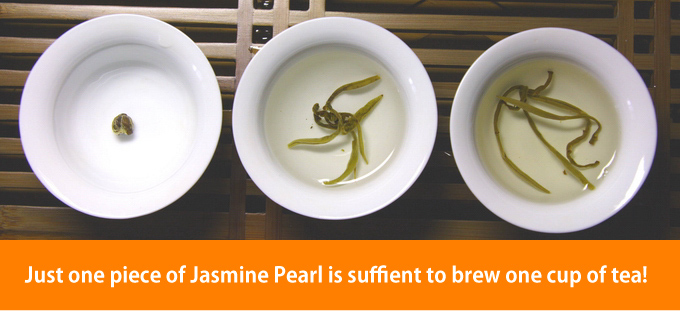
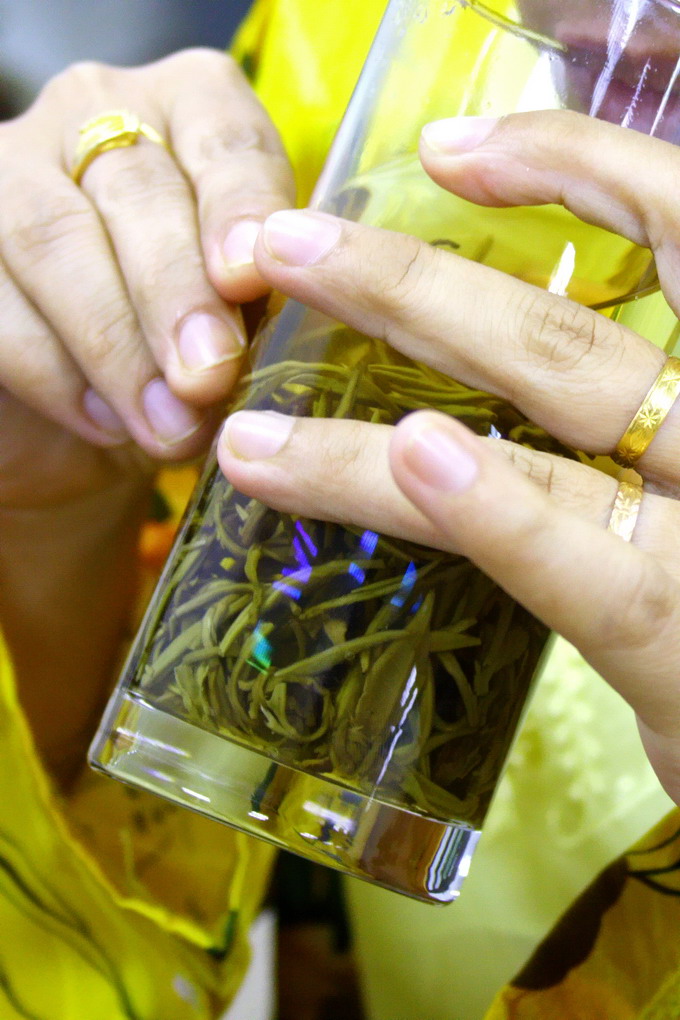
The brewed leaves show a yellowish green color, delicate and bright in appearance. The color and length of bud and leaf is consistent and even. When the pearl unfurl, the long bud with leaf is clearly seen in the water. The bud is fleshy with robust and thick leaf. When touched with finger, the bud and leaf are thick, but soft and elastic. If the tea is of poor quality, leaf is a mixture of greenish brown or yellowish brown with dull appearance. Besides, red/brownish color may be seen on leaf indicating poor handling during process and leaf was damaged. When touched, the leaf is very thin, coarse and stiff, and may contain bud/leaf of varying sizes. Good quality tea should not contain much insect bitten leaf.
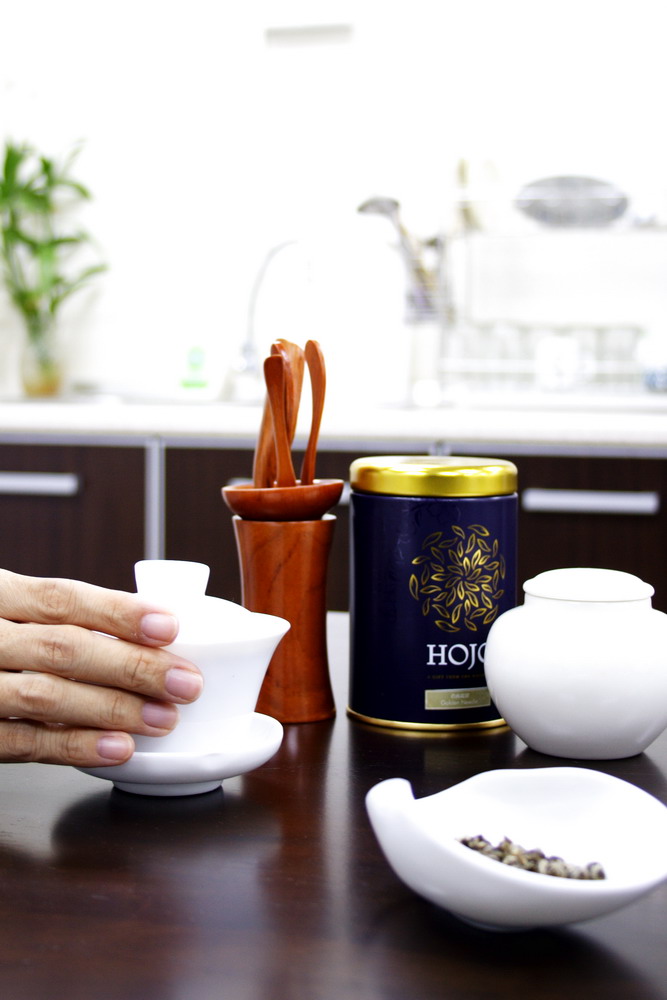
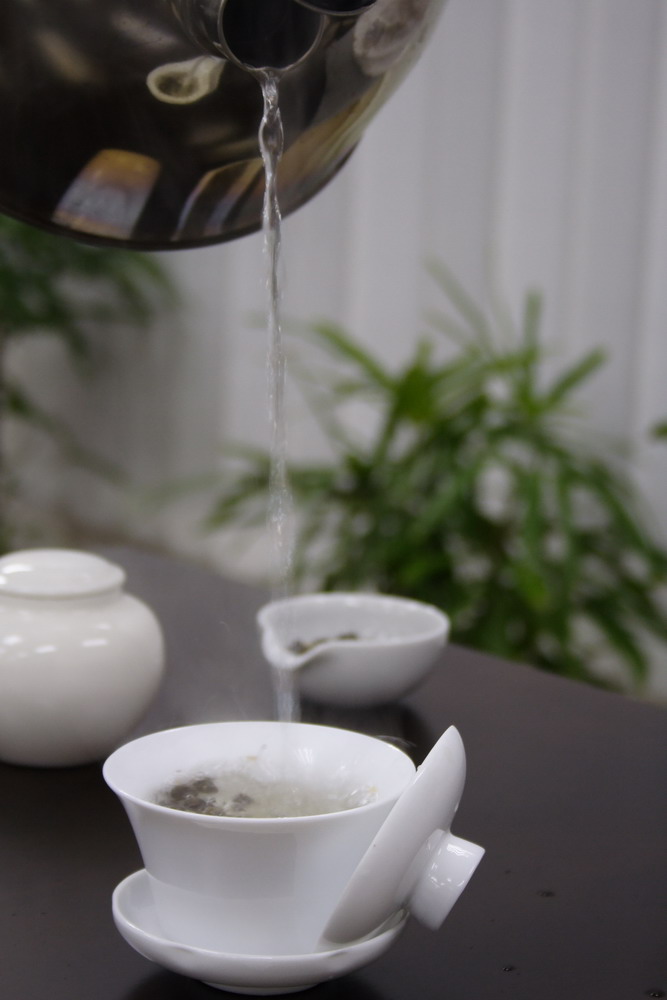
In you are using tap water, it is necessary to use a water filter that consists of activated carbon filter. Otherwise, you wouldn't be able to enjoy the authentic taste of tea. If using a commercial mineral water, it is important to choose the natural mineral water. Never use distilled water or reversed osmosis processed water. These water lack of mineral content and thus the taste of tea is too soft and a little plain. Soft water is better than hard water. Brewing tea with hard water makes taste bitter while soft water makes taste gentle and sweet. The softness of water is written on the mineral water bottle as TDS: total dissolved solid. You need to choose the water that TDS is below 200mg/liter.
Use fresh water which has not been boiled before. Bring the cold water to boil and cool down until required temperature. This is to evaporate some chlorine from the water.
Hot water: leaf weight = 1:50 (4g of leaf for 200ml of water)
Temperature: 80-85 degree C
Once a bag of tea is opened, please finish it within 3 months if you wish to enjoy its freshness. From the medical point of view, it is safe to consume the tea even if it is kept for a few years. However the freshness disappears if it is kept for too long. Tea must be tightly sealed before it is kept. Tea should be kept in ambient and dry conditions such as in the living room, but it must be completely away from humidity. Tea should not be kept in the kitchen as the environment is very humid. Avoid enclosed area such as inside the cupboard or drawer as these places are damp. Also avoid opening the bag of tea in humid atmosphere. It is recommended to open the bag during a sunny day or under air-conditioned atmosphere. Once tea leaves absorb moisture, deterioration of tea will be triggered within a few days. Tea will then give an astringent taste, sometime it tastes sour. The fresh aroma also becomes weaker.
The quality of tea lasts longer if it is kept in the fridge. However we strongly recommend you not to keep tea in the fridge. When tea is withdrawn from the fridge, there is usually condensation. Once tea is exposed to moisture during condensation, the quality will deteriorate within a few days. The higher moisture content in the tea leaves will trigger oxidation and it will completely destroy the quality of tea.
Here’s one frequently asked question: what happens if bag is sealed using tape or tea is packed in zipper bag and kept inside the fridge?
For your information, these simple sealing methods are not sufficient. When the bag is withdrawn from the fridge, it is cold inside the bag and therefore causes negative pressure. Air will be drawn from outside and condensation will occur. In addition, if the bag is taken in and out from the fridge very often, this will cause heat stress to the tea leaves as temperature is increased and decreased very frequently. If tea is kept in the fridge, when it is withdrawn from the fridge, it is necessary to leave it in ambient atmosphere for more than 24 hours in order to warm up the tea leaves. Based on our experience, 12 hours is not long enough. We may think tea is warmed up, but inside the bag, the tea leaves are still cold due to insulation effect.

Please feel free to send us e-mail for enquiry at:

 |
We accept various kinds of credit card through Paypal.
Only if customer prefer other option of payment, we suggest "Bank Transfer".
Various choice of shipping method
EMS, SAL, Small Packet, Small Packet (SAL) Yamato Express and Surface
For shipping tea, we usually suggest small air parcel, the estimated shipping cost of tea in 100g (with wrapping material ) is
Small Parcel
USA JPY 600, EU JPY600 and Asia JPY470
Small Packet (SAL)
USA JPY380, EU JPY380 and Asia JPY320
The shipping fee to oversea by small air parcel happens to be even cheaper than domestic shipping fee in Japan.
For your information, some countries, EU in particular imposes custom duty. We need buyer to bare the duty. We are sorry, but we cannot change the amount on the invoice, and we do not mark any packages as gifts. We will strictly follow the custom regulation.
 日本語サイトへ