
 Thank you for visiting HOJO website. If you have any enquiry, please feel free to get in touch with us at

▼ Akira Hojo
▼ Hojo Newsletter
▼ HOJO FACEBOOK




HOME >Cast Iron Kettle >Seikodo
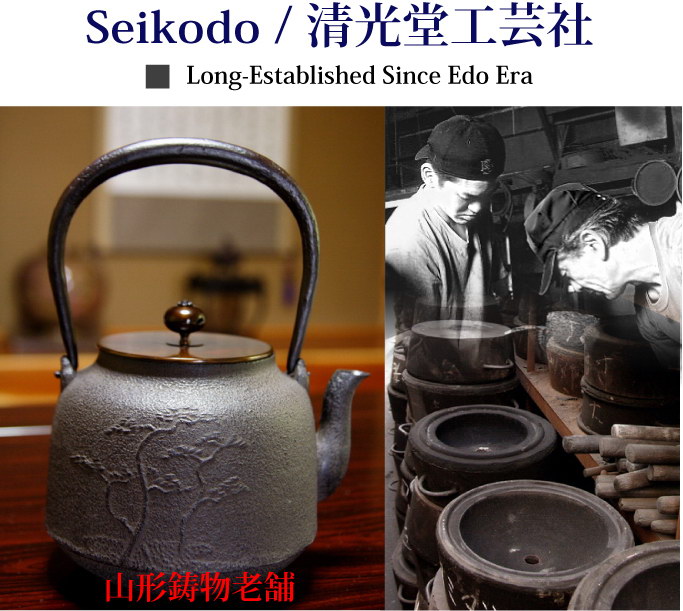

Seikodo is one of the oldest brands in Yamagata. It has been in existence since the 1600’s. During the Edo Era, Seikodo specialized in casting weaponry, kitchen utensils or praying paraphernalia for Buddhist worship. From the 1900’s onwards, the 6th generation of Seikodo began making cast iron kettles. At present, it is the 10th generation of this family who are only a handful dedicated masters casters of iron kettle in Yamagata.
Sato Takumi who is the 10th generation caster of Seikodo is now heading this brand with his father, Oko. He emphasizes the element of Wabi-Sabi, which means the imperfect beauty described by the word "aesthetic" and this is reflected in his products. He has introduced various kinds of picture that reminds us of Kyoto style tetsubin.
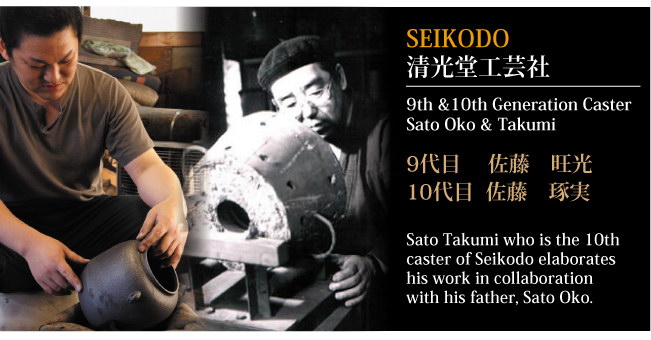
The workshop is located at the residential area of Yamagata city. It is managed by Takumi and his father, Oko, and a few more other casters. Seikodo is more specialized in cast iron tea equipment for Sado (茶道) and there are a number of molds meant for these high-end products. Yamagata produces the hand-made cast iron kettle deploying the original method which uses the "dry mold". A metal mold is used to make the clay mold. The clay mold is then dried and used for casting iron. It is effective in producing the item at a lower cost, yet it involves elaborate work in making the metal mold.
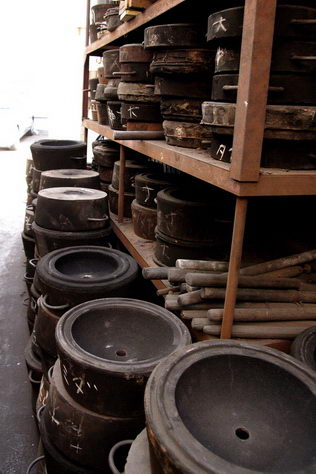
|
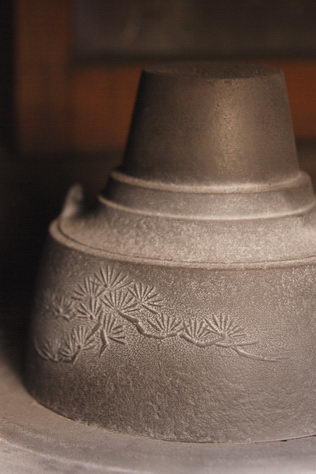
|
|
| Clay mold for the bottom part of kettle | Metal Mold for making Dry Mold | |
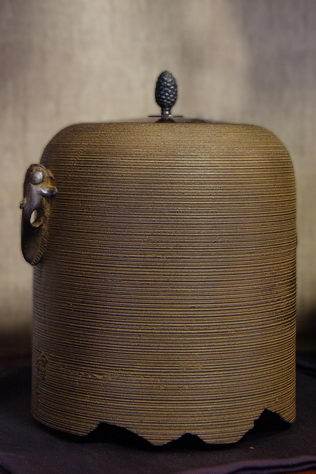
|
|
|
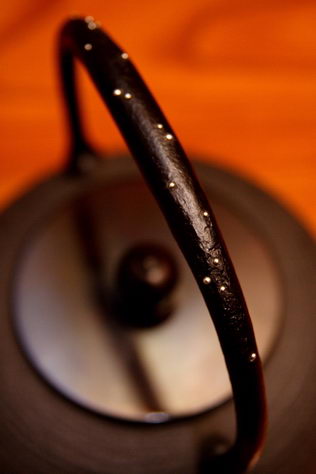
| High-end cast iron tea ware made of single clay mold | Silver inlay on handle and copper cap |

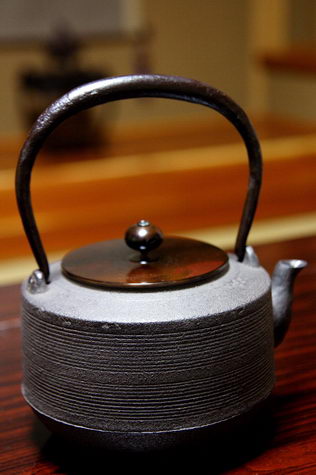
Katatsuki Sujiiri Tetsubin 1.4 Liter(肩衝筋入鉄瓶) |
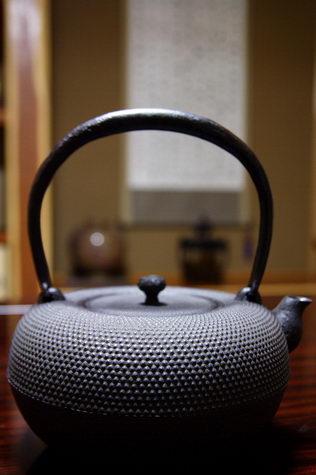
Mikan Arare Tetsubin 1.8 Liter(蜜柑霰鉄瓶) |
|
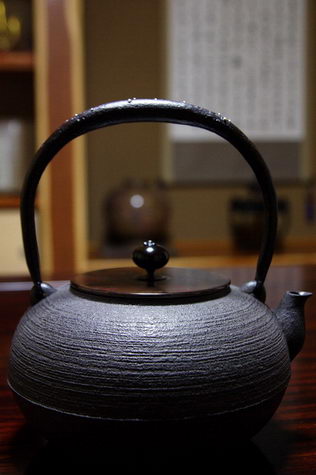
Hiramaru Hakeme Tetsubin with Silver Inlay on handle1.4 Liter (平丸刷毛目 銀象嵌弦) |
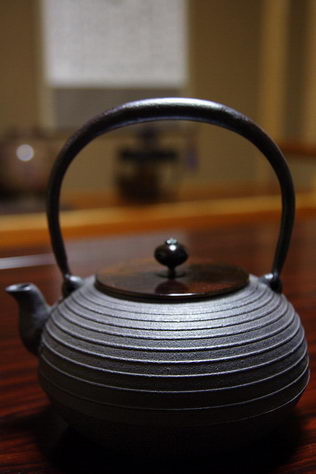
Hiramaru Sujiiri Gata Tetubin 1.4Liter(平丸筋入鉄瓶) |
|
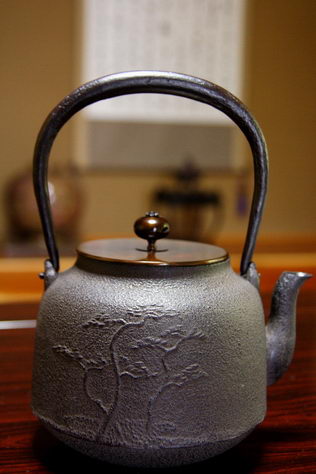
Shinnari Hama Matsu 1.4 Liter(真形浜松) |
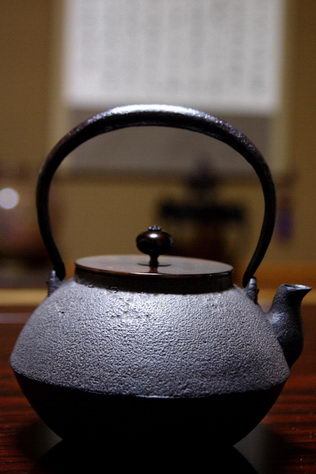
Santama Gata Tetsubin 1.4 Liter(算珠形鉄瓶) |
Please note that the indicated volume is based on the fully loaded volume. The working volume is usually 50-60% of the indicated volume. The maxium level of water is up to the spout.

Please feel free to send us e-mail for enquiry at:

 |
We accept various kinds of credit card through Paypal.
Only if customer prefer other option of payment, we suggest "Bank Transfer".
Various choice of shipping method
EMS, SAL, Small Packet, Small Packet (SAL) Yamato Express and Surface
For shipping tea, we usually suggest small air parcel, the estimated shipping cost of tea in 100g (with wrapping material ) is
Small Parcel
USA JPY 600, EU JPY600 and Asia JPY470
Small Packet (SAL)
USA JPY380, EU JPY380 and Asia JPY320
The shipping fee to oversea by small air parcel happens to be even cheaper than domestic shipping fee in Japan.
For your information, some countries, EU in particular imposes custom duty. We need buyer to bare the duty. We are sorry, but we cannot change the amount on the invoice, and we do not mark any packages as gifts. We will strictly follow the custom regulation.

 日本語サイトへ