


- HOME >
- Origin of Tea
Yunnan Field Report 2026: Climate Conditions and Tea Growth This Year
- [2026.04.09] Posted By Akira Hojo
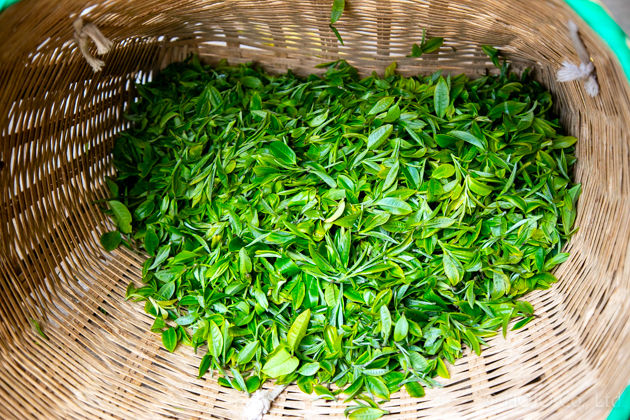
We have been in Yunnan since March 28, and from the 29th, we have been producing and sourcing tea mainly in Yongde County, Zhenkang County in Lincang, and Baoshan.
We plan to stay here until the first or second week of May, as very old trees used for single tree tea and purple tea grow slowly, and their harvest season is from late April to early May.
Quality linkage starting from Yunnan
Based on my experience, the growth conditions and quality of tea in Yunnan are directly reflected in other tea-producing regions in China, as well as in Taiwan and Japan.
For example, in years when Yunnan tea has a very green note and weak floral character, the same trend appears in Phoenix Dancong, Taiwanese tea, and Japanese tea. This pattern is not limited to tea, but can also be seen in other agricultural products such as cucumbers and fruit.
In other words, the growth conditions and quality of tea in Yunnan can be regarded as a leading indicator for other regions.
Spring 2026 climate and delayed harvest
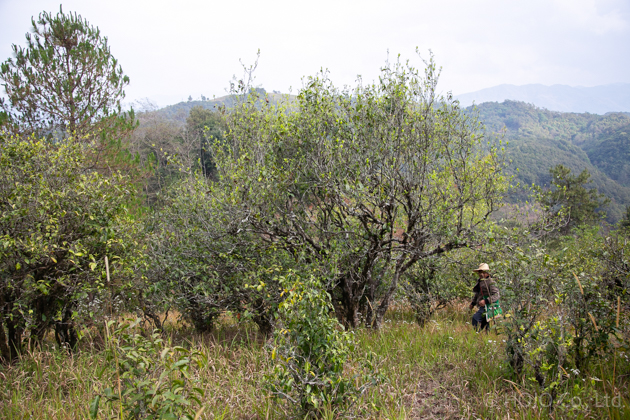
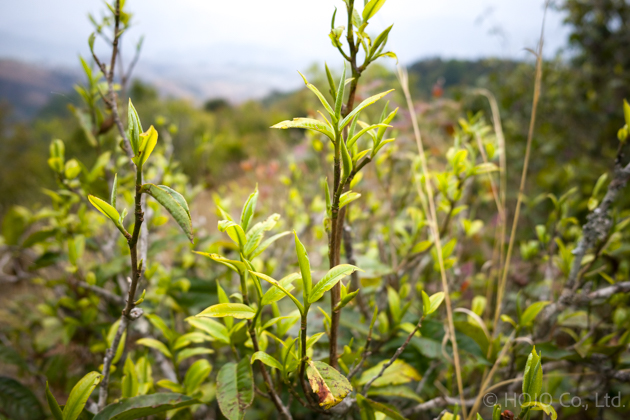
Since the Chinese New Year, dry and cool weather has continued this year, slowing the growth of tea. As a result, tea plucking, which usually starts around March 20, was delayed by about 10 days.
However, on March 28 and 29, when we arrived, there was unusually heavy rain. This seemed to wake up the dormant tea, and buds began to emerge all at once except for those very old tea trees.
Because of this, we expected a large volume of tea to be harvested around April 10. However, temperatures did not rise afterward, and there was no significant rainfall, so harvesting has been scattered, and the overall season is delayed.
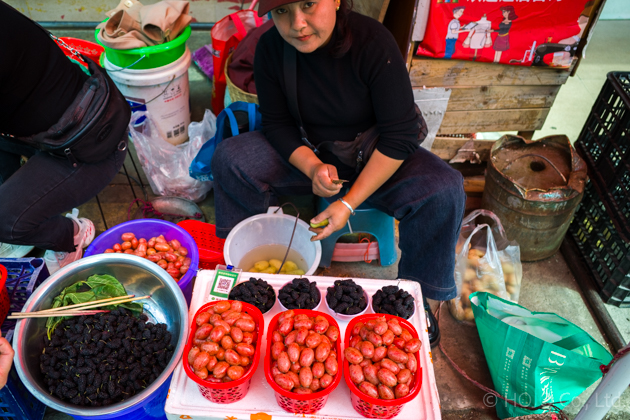
This delay is not limited to tea. Cherries, which signal the arrival of spring in Yunnan, as well as the edible Bauhinia flower and many other crops, are also about 10 days behind the usual schedule.
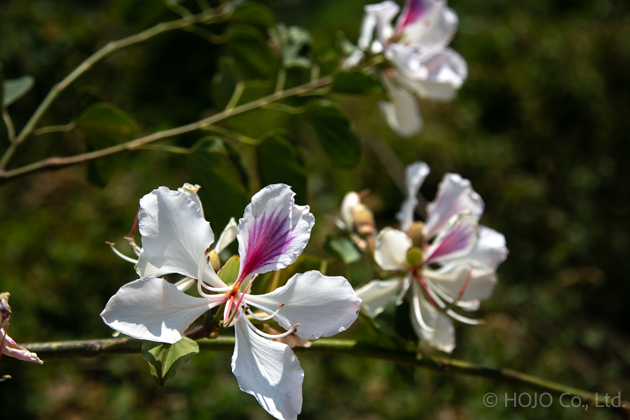
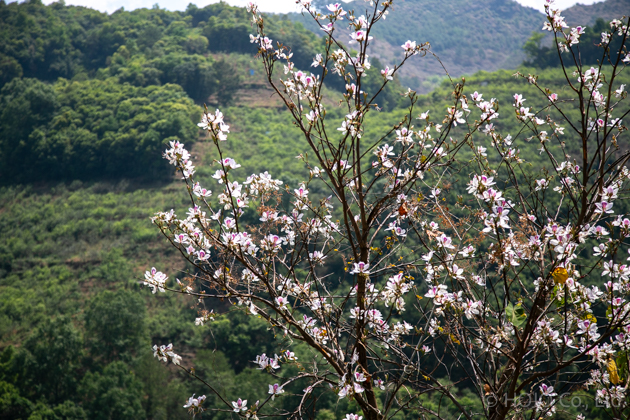
A flower that signals the arrival of spring in Yunnan. It usually reaches full bloom around March 25, but this year it is about 10 days late.
Agricultural calendar and crop growth
We tend to look at the season based on the Gregorian calendar, but from our experience, the most accurate indicator of crop growth is the Chinese agricultural calendar. In fact, many people involved in tea production in Yunnan constantly refer to it.
The agricultural calendar can differ from the Gregorian calendar by several weeks to nearly two months, depending on the year. In years when a leap month is inserted, that month is added entirely, so the difference becomes especially large. It is based on the lunar cycle, starting from the new moon, with each month lasting about 29.5 days. Unlike the Gregorian calendar, which is based only on the sun, the agricultural calendar incorporates both the moon and the sun.
The reason why this calendar reflects crop growth so accurately has not yet been scientifically clarified, but several hypotheses exist. One is that the moon’s gravity affects water on Earth. The same force that creates ocean tides may also affect moisture in the soil and the movement of water within plants, so the position of the agricultural calendar may be linked to soil conditions and plant activity in that year.
Another is that in years when the agricultural calendar is delayed, the rise in spring temperature may also be delayed due to the relative positions of the moon and the sun. This matches the tendency for cooler conditions to continue longer and may more directly explain delays in crop growth.
In 2026, the agricultural calendar is still equivalent to February, which is rare in the past 10 years. In 2021, when the agricultural calendar was also equivalent to February, crop growth was delayed overall. When the agricultural calendar is delayed, crop growth tends to be delayed, and this matches the delayed harvest of tea, cherries, and other crops this year.
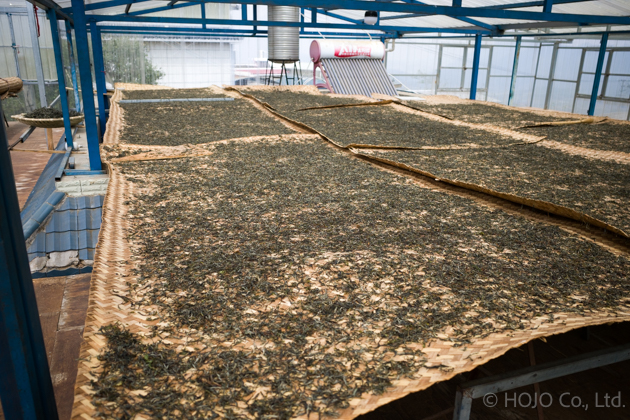
Raw material conditions and production risks in 2026
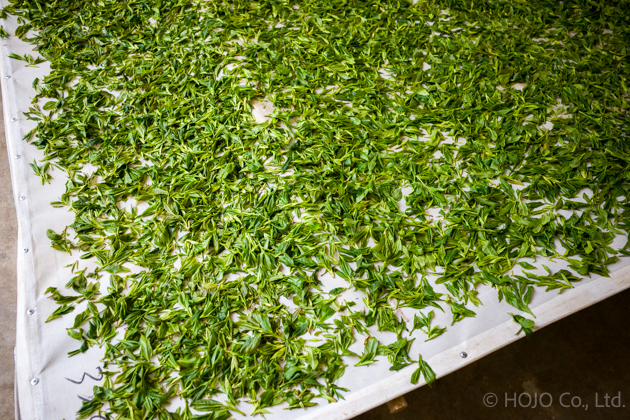
This year, the flavor of tea is relatively good and floral, so the raw material looks promising. However, from a production perspective, we cannot be optimistic.In 2021, even in early April, the agricultural calendar was still at a stage equivalent to February, which caused large variation in white tea withering. At that time, due to the pandemic, we could not travel to the origin and had to leave everything to the producers.
This year is also a very difficult year for white tea production. However, since we are on site, we are working to improve processing conditions by introducing alternative drying methods and other adjustments. It is a year that requires constant attention.
- Please share with your friends
- Do you find our articles informative and useful? If yes, please kindly share it with your friends. We look forward to your opinion and comment as well.

Related Articles
How to get the latest update on HOJO?
1. Follow Twitter, 2. Click "Like" on Facebook, and 3. Subscribe in newsletter. You can have the latest tea news from HOJO.
 Subscribe the Newsletter to enjoy the privileges
- You may receive a free sample upon purchase, or you may have the priority to purchase special products. So please remember to subscribe our newsletter as well as the social network.
HOJO TEA Online Shop NEWS
- Ancient White Tea 2026 and Ancient Bai Mu Dan 2026 Are Now Available
- We have released two white teas produced by us in Yunnan in 2026: Ancient White Tea 2026 and Ancient Bai Mu Da …
- Yong De Wild White Tea 2026 – Limited Release
- We have released Yong De Wild White Tea 2026. We can produce only a very limited quantity each year, and it us …
NEW ARTICLES
 Ancient White Tea 2026 and Ancient Bai Mu Dan 2026 Are Now Available
- We have released two white teas produced by us in Yunnan in 2026: Ancient White Tea 2026 and Ancient Bai Mu Da …
 Yong De Wild White Tea 2026 – Limited Release
- We have released Yong De Wild White Tea 2026. We can produce only a very limited quantity each year, and it us …
 New Release: High Mountain White Tea 2026
- We have released 2026 High Mountain White Tea, one of our popular white teas. This white tea is made from tea …
 New Release: Tsukigase Black Tea Benihikari
- We have released a black tea from Tsukigase, Nara Prefecture, made from the Benihikari cultivar grown without …
 New Release of Tsuge Woodfire Hojicha
- We have created a hojicha unlike conventional hojicha through our choice of raw materials, heat source, and ro …
 New Release: Da Xue Shan Wild Raw Pu-erh Tea 2026 Loose
- We have released the loose-leaf version of Da Xue Shan Wild Raw Pu-erh Tea. Loose-leaf wild tea is produced in …
 3 Types of Loose Leaf Ripe Pu-erh: One-Week Pre-Order Until 14th May
- We have been working with both raw and ripe pu-erh for more than 15 years. Over the years, our focus has been …
 Li Hua Lin Ancient Tree Raw Pu-erh Tea 2025 Loose Comparable to Single Tree Tea
- We have released Li Hua Lin Raw Pu-erh Tea 2025 Loose. This tea is made from material harvested from ancient t …
 Yunnan Field Report 2026: Climate Conditions and Tea Growth This Year
- We have been in Yunnan since March 28, and from the 29th, we have been producing and sourcing tea mainly in Yo …
 New Release of Huo Di Raw Pu-erh Tea Loose 2025
- We have released Huo Di Raw pu-erh tea 火地古樹生茶 Loose Leaf 2025. This tea is a raw pu-erh tea made from naturall …
Category
- New Arrival at HOJO Online Shop
- Featured Articles
- Newsletter
- Types of Tea
- Origin of Tea
- Teapot and Tea Equipment
- Tea Column
- How to enjoy tea
- Tea Processing
- How to choose quality tea
- Tea constituents and functional effect
- Safety of Tea
- Foods
- Tea Business Operation
- Hobby and Outdoor Activity
- Ranking of Tea
- Video
- FAQ
- Media Release
Profile

- AKIRA HOJO
- I invite you to experience my tea selections.I was born in Nagano, Japan. In university, I studied agricultural chemistry, and I have the master degree in food science. I worked in Japanese food industry for 10 years. I involved in R&D, QC and QA. As a factory manager, I implemented ISO9000 series and managed the factory.


Media Release
- The Art of Tea Magazine
- We posted the article on “The Art of Tea Magazine No.9, the magazine is published in Taiwan. We featured …
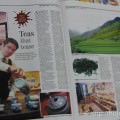
- New Straits Times
- The Malaysian National Newspaper, New Straits Times featured HOJO Tea on 17-Oct-2007.
Shop Info

Address:Lot No. T-215, 3rd Floor, The Gardens Mall, Mid Valley City, Lingkaran Syed Putra, 59200 Kuala Lumpur
Tel: +603-2287-4537
Business Hour: 10am to 10pm