


- HOME >
- New Arrival at HOJO Online Shop
New Release of Tsuge Woodfire Hojicha
- [2026.08.05] Posted By Akira Hojo
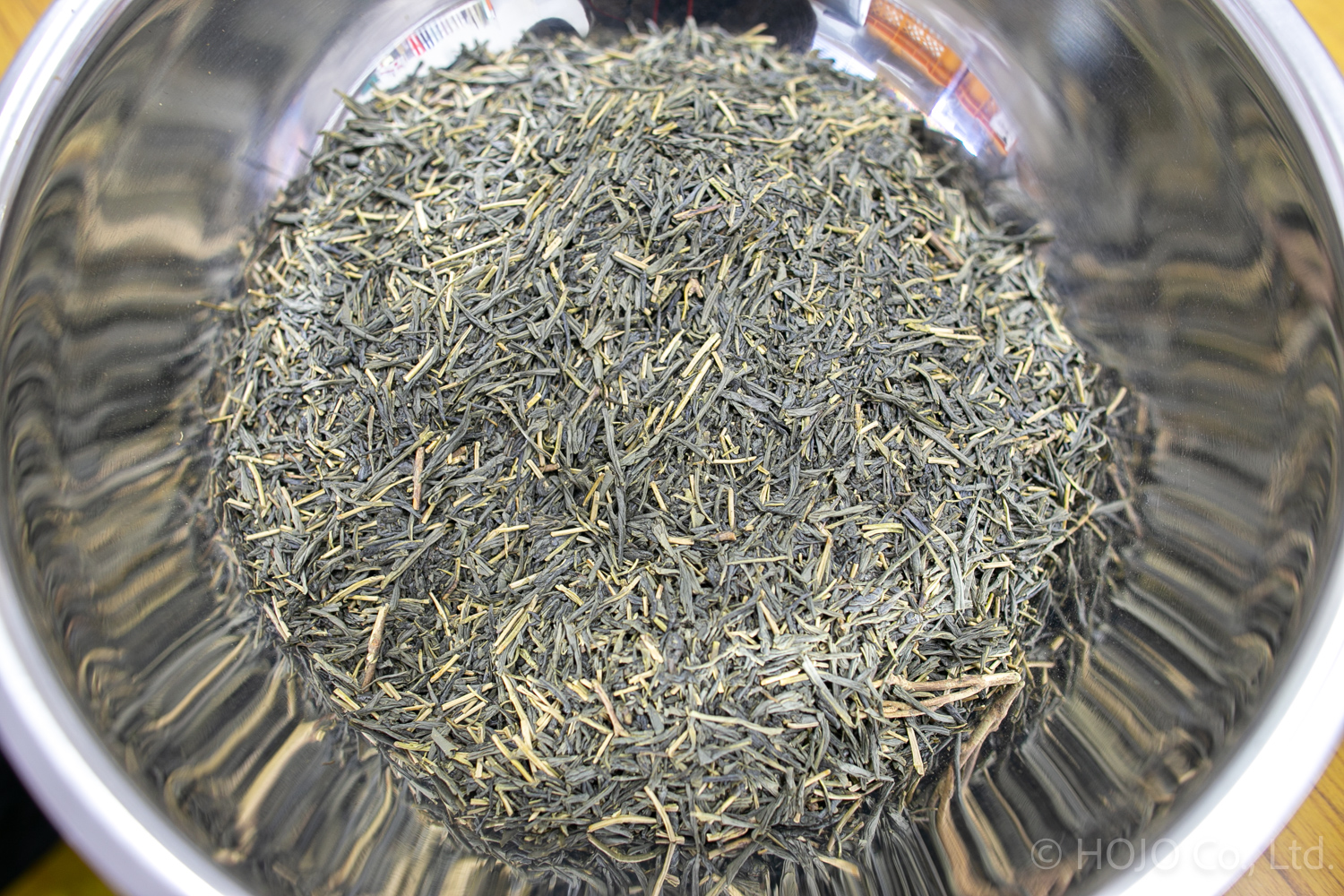
We have created a hojicha unlike conventional hojicha through our choice of raw materials, heat source, and roasting method.
This tea is a wood-fired hojicha made from the first flush of naturally cultivated tea from Tsuge, Nara Prefecture, where the tea is grown without pesticides or fertilizers. I worked on site with the producer throughout both the development and production of this hojicha.
Made from First Flush Naturally Cultivated Sencha
One of the important factors that determines the quality of hojicha is its aftertaste. A long aftertaste adds depth to the flavor and makes the tea much richer.
To produce this wood-fired hojicha, we selected sencha made from the first flush harvested in Tsuge. This tea is grown without fertilizers and is known for its exceptionally long-lasting aftertaste.
The Difference Made by the Heat Source
The heat source plays an important role in tea roasting. Even when tea is roasted in the same way, the flavor changes significantly depending on whether the heat source is wood, electricity, or gas.
The same principle applies to cooking. When grilling meat or eel, the result is clearly different when using wood or charcoal instead of gas or an electric heater.
Most people recognize that food tastes better when grilled directly over charcoal or wood. However, the difference is not limited to direct flame cooking. Even when a metal plate or frying pan is used, the heat source still affects the final result.
For example, when frying an egg in the same pan, the flame never touches the egg directly, yet the finished flavor differs noticeably depending on whether the pan is heated by wood, charcoal, or gas.
Likewise, tea roasted over wood or charcoal tends to develop a cleaner and more transparent flavor. This is because the nature of the heat source influences the flavor even though the tea leaves are never exposed directly to the flame.
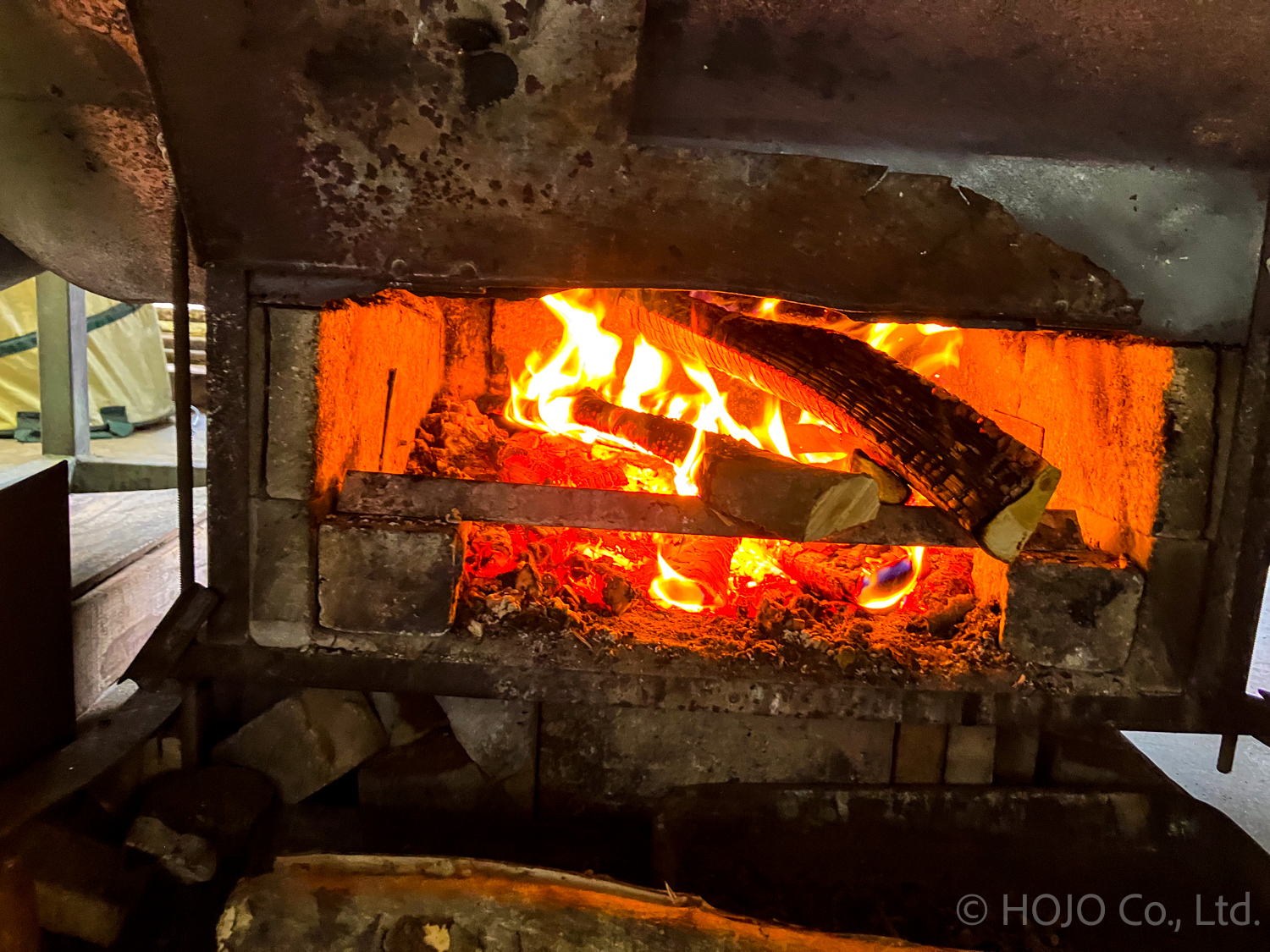
We chose wood firing because we know that certain flavors can only be achieved by using wood or charcoal as the heat source.
The Influence of the Firewood
If you have used a wood-burning stove, you have probably noticed that different types of firewood produce different heat. Natural hardwoods are especially valued.
The same principle is also well known among oolong tea producers. The type of wood or charcoal used for roasting affects the flavor of the finished tea. For this reason, the charcoal used for roasting oolong tea is typically made from specific hardwood species.
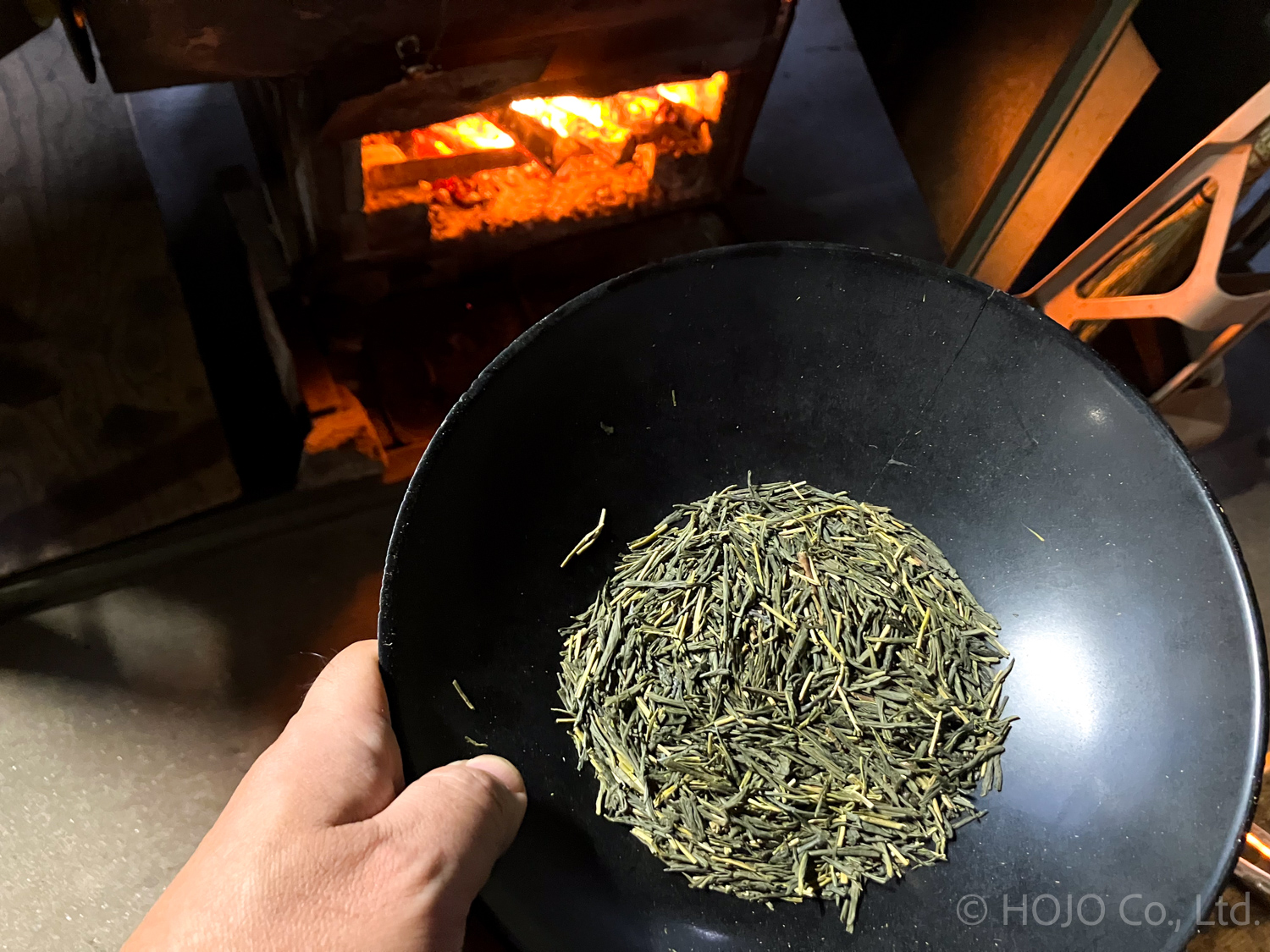
For this wood-fired hojicha, we selected natural Japanese oak firewood and roasted the tea over an oak fire.
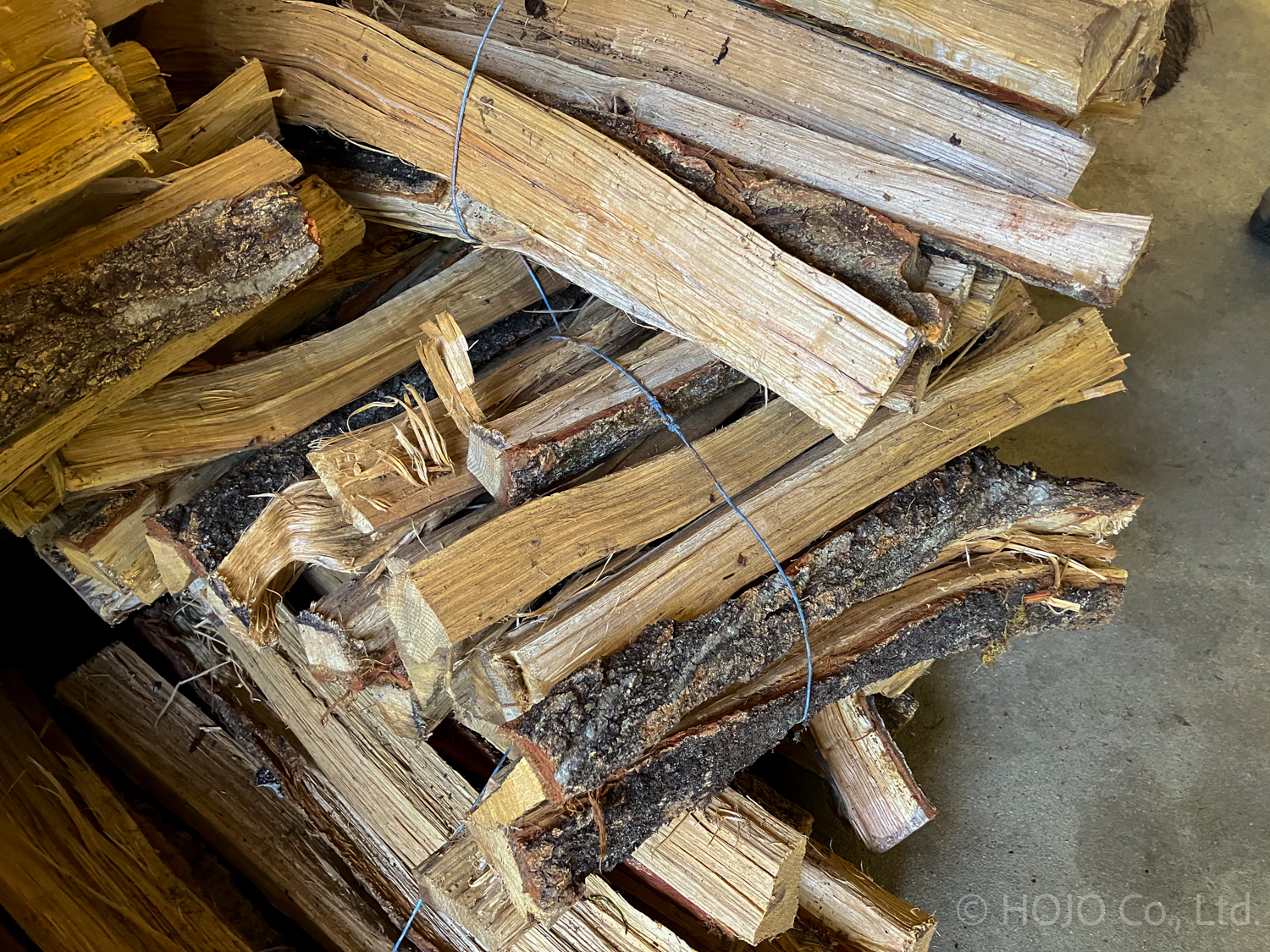
Roasting for Maturation Rather Than Charring
When developing this hojicha, our goal was not simply to scorch the tea leaves. Instead, we applied the concept of oolong tea roasting, allowing the tea to mature gradually through heat and develop a naturally fruity flavor.
Unlike conventional Japanese hojicha, which is typically roasted quickly at very high temperatures of above 180°C, this tea is roasted slowly at a lower temperature. Rather than scorching the leaves, we allow the tea to mature gradually through heat. As a result, the tea components change gently during roasting, producing a naturally sweet and fruity flavor.
For this reason, the tea is roasted continuously for many hours while maintaining a relatively low temperature. Its roasting philosophy is clearly different from that of conventional hojicha.
The product is named “Light Roast.” The term does not refer to the roasting time or roasting intensity. Instead, it describes a roasting style that emphasizes maturation rather than charring.
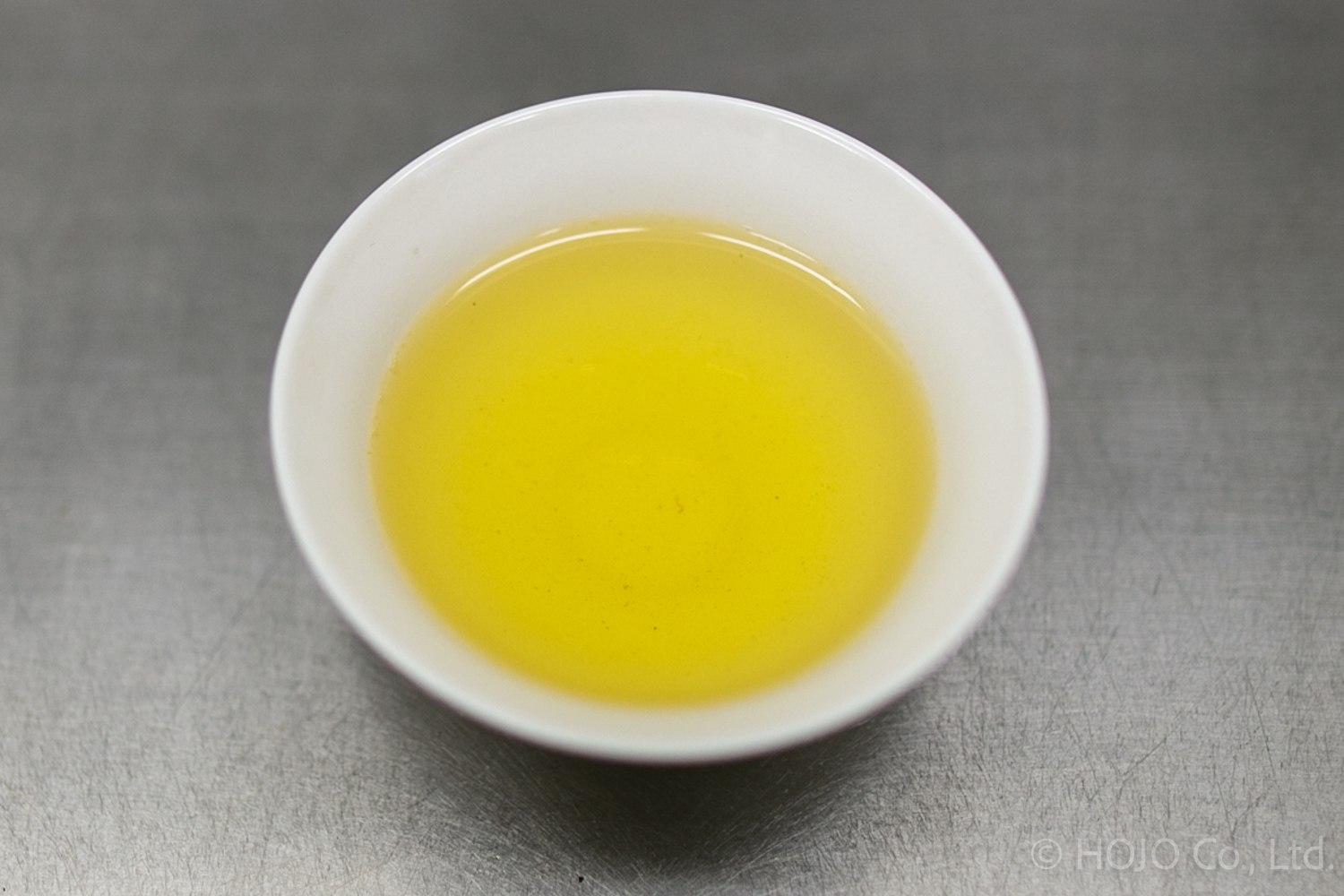
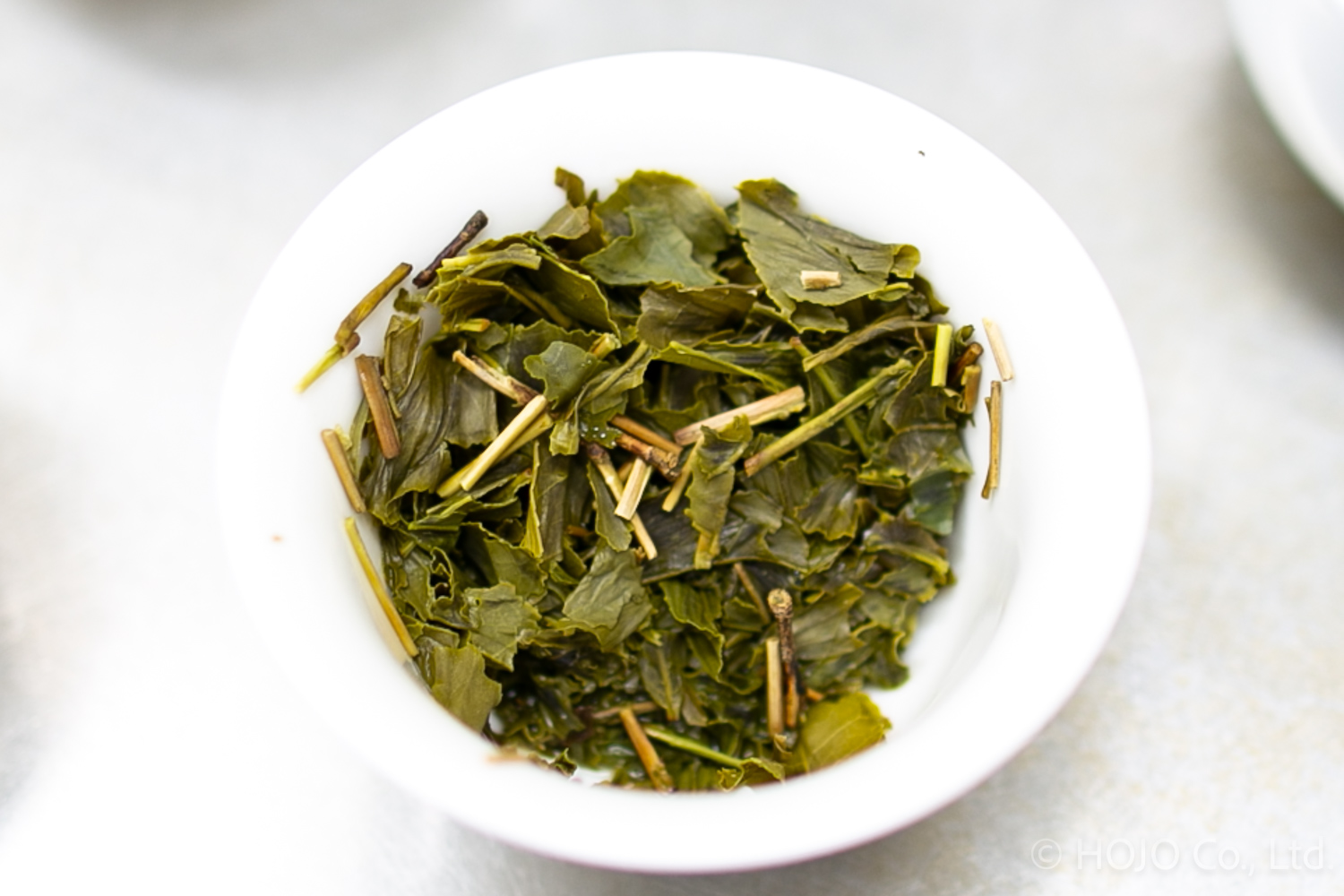
Appearance and Flavor
Because the roasting process is not intended to scorch the leaves, they remain green and still look like sencha. At first glance, they do not appear to be hojicha, but instead resemble lightly roasted oolong teas such as Tie Guan Yin or Dong Ding Oolong.
This tea combines the refreshing character of sencha with a naturally sweet flavor reminiscent of dried fruits and flowers that develops during roasting. It is easy to drink and pairs well with both meals and desserts.
How to Buy This Tea?
For international customers, please refer to the following page for pricing:
https://hojotea.com/img/tealineup10.pdf
Please send your inquiry to us via email at info2@hojotea.com.
For customers in Malaysia, Singapore, and Brunei, please click here to visit the product page.
https://shop.hojotea.com.my/collections/japanese-green-tea/products/tsuge-wood-fired-hojicha
- Please share with your friends
- Do you find our articles informative and useful? If yes, please kindly share it with your friends. We look forward to your opinion and comment as well.

Related Articles
How to get the latest update on HOJO?
1. Follow Twitter, 2. Click "Like" on Facebook, and 3. Subscribe in newsletter. You can have the latest tea news from HOJO.
 Subscribe the Newsletter to enjoy the privileges
- You may receive a free sample upon purchase, or you may have the priority to purchase special products. So please remember to subscribe our newsletter as well as the social network.
HOJO TEA Online Shop NEWS
- New Release: Da Xue Shan Wild White Tea 2026, Loose Leaf
- We have released Da Xue Shan Wild White Tea 2026 in loose-leaf form.
- Ancient White Tea 2026 and Ancient Bai Mu Dan 2026 Are Now Available
- We have released two white teas produced by us in Yunnan in 2026: Ancient White Tea 2026 and Ancient Bai Mu Da …
NEW ARTICLES
 New Release: Da Xue Shan Wild White Tea 2026, Loose Leaf
- We have released Da Xue Shan Wild White Tea 2026 in loose-leaf form.
 Ancient White Tea 2026 and Ancient Bai Mu Dan 2026 Are Now Available
- We have released two white teas produced by us in Yunnan in 2026: Ancient White Tea 2026 and Ancient Bai Mu Da …
 Yong De Wild White Tea 2026 – Limited Release
- We have released Yong De Wild White Tea 2026. We can produce only a very limited quantity each year, and it us …
 New Release: High Mountain White Tea 2026
- We have released 2026 High Mountain White Tea, one of our popular white teas. This white tea is made from tea …
 New Release: Tsukigase Black Tea Benihikari
- We have released a black tea from Tsukigase, Nara Prefecture, made from the Benihikari cultivar grown without …
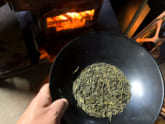
 New Release of Tsuge Woodfire Hojicha
- We have created a hojicha unlike conventional hojicha through our choice of raw materials, heat source, and ro …
 New Release: Da Xue Shan Wild Raw Pu-erh Tea 2026 Loose
- We have released the loose-leaf version of Da Xue Shan Wild Raw Pu-erh Tea. Loose-leaf wild tea is produced in …
 3 Types of Loose Leaf Ripe Pu-erh: One-Week Pre-Order Until 14th May
- We have been working with both raw and ripe pu-erh for more than 15 years. Over the years, our focus has been …
 Li Hua Lin Ancient Tree Raw Pu-erh Tea 2025 Loose Comparable to Single Tree Tea
- We have released Li Hua Lin Raw Pu-erh Tea 2025 Loose. This tea is made from material harvested from ancient t …
 Yunnan Field Report 2026: Climate Conditions and Tea Growth This Year
- We have been in Yunnan since March 28, and from the 29th, we have been producing and sourcing tea mainly in Yo …
Category
- New Arrival at HOJO Online Shop
- Featured Articles
- Newsletter
- Types of Tea
- Origin of Tea
- Teapot and Tea Equipment
- Tea Column
- How to enjoy tea
- Tea Processing
- How to choose quality tea
- Tea constituents and functional effect
- Safety of Tea
- Foods
- Tea Business Operation
- Hobby and Outdoor Activity
- Ranking of Tea
- Video
- FAQ
- Media Release
Profile

- AKIRA HOJO
- I invite you to experience my tea selections.I was born in Nagano, Japan. In university, I studied agricultural chemistry, and I have the master degree in food science. I worked in Japanese food industry for 10 years. I involved in R&D, QC and QA. As a factory manager, I implemented ISO9000 series and managed the factory.


Media Release
- The Art of Tea Magazine
- We posted the article on “The Art of Tea Magazine No.9, the magazine is published in Taiwan. We featured …
- New Straits Times
- The Malaysian National Newspaper, New Straits Times featured HOJO Tea on 17-Oct-2007.
Shop Info
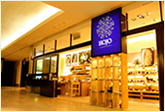
Address:Lot No. T-215, 3rd Floor, The Gardens Mall, Mid Valley City, Lingkaran Syed Putra, 59200 Kuala Lumpur
Tel: +603-2287-4537
Business Hour: 10am to 10pm