


- HOME >
- New Arrival at HOJO Online Shop
New Release: Da Xue Shan Wild Raw Pu-erh Tea 2026 Loose
- [2026.07.31] Posted By Akira Hojo
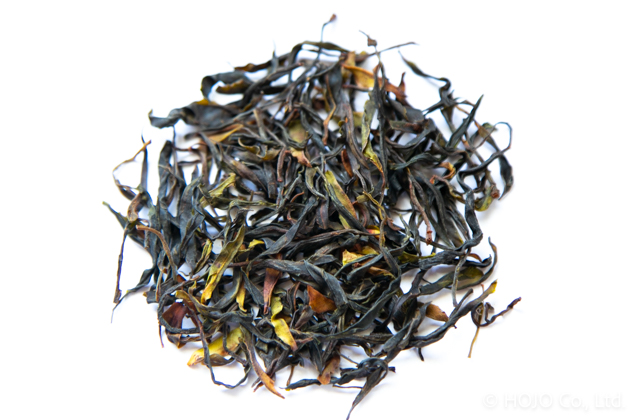
We have released the loose-leaf version of Da Xue Shan Wild Raw Pu-erh Tea.
Loose-leaf wild tea is produced in very limited quantities and usually sells out within a short period every year. Although we secured a relatively larger quantity this year, demand is expected to be high. If you are interested, we recommend placing your order early.
Da Xue Shan Wild Raw Pu-erh Tea 2026 – An Exceptionally Aromatic Harvest
Compared with recent years, the 2026 harvest has good flavor.
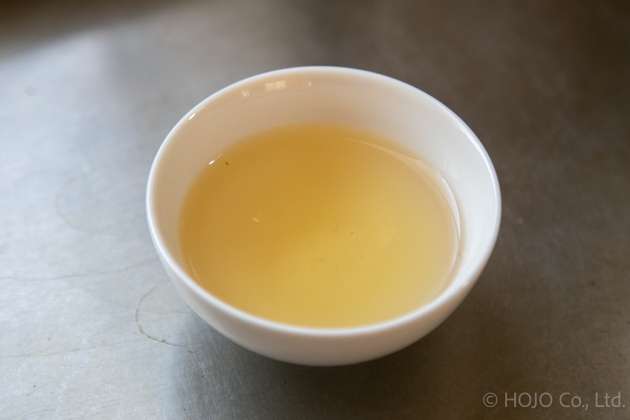
This year’s tea is relatively more fragrant, with a pronounced sweet grape-like flavor.
Freshly produced wild tea also has a pronounced mineral character, with a rich taste and a distinct iron-like aftertaste. If stored unopened for several months, the tea undergoes its initial stage of aging. During this period, the sweet fruity flavor becomes more pronounced, while the iron-like impression gradually recedes, resulting in a more refined and floral flavor.
When kept unopened (under oxygen-free conditions) for more than three years, the tea develops aromas reminiscent of raisins together with a honey-like sweetness, developing a floral and complex fruity flavor. It is delicious when enjoyed immediately after production, but it is equally rewarding to age it and allow the flavor to develop according to your own preference.
Please note that the aging speed is closely related to the storage temperature. The warmer the storage environment, the faster the tea matures.
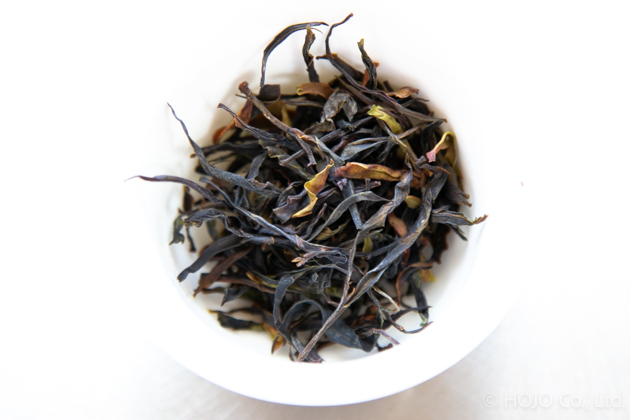
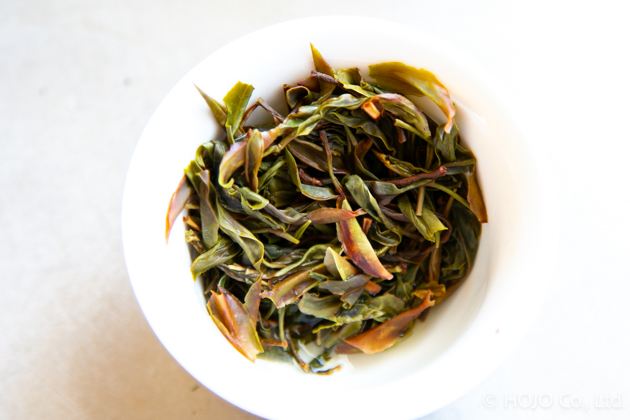
Cultivated Camellia taliensis Sold as “Wild Tea”
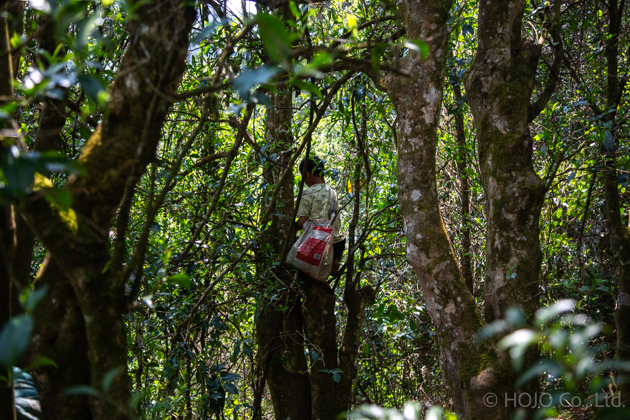
Strictly speaking, wild tea refers to tea made from tea trees that grow naturally in the mountains, rather than from cultivated tea gardens.
In Yunnan, however, the term “wild tea” is commonly used in a different way. Locally, all Camellia taliensis is referred to as “wild tea,” regardless of whether it grows naturally in the mountains or is cultivated in tea gardens. As a result, the term “wild tea” is often used simply to indicate the species Camellia taliensis, rather than whether the tea is genuinely wild.
This is similar to the term “wild rice.” Although much of today’s wild rice is cultivated, it continues to be called “wild rice” because the name refers to the species rather than whether it was harvested from a natural wild habitat.
As the popularity of wild tea has increased, Camellia taliensis has been widely planted in many parts of Yunnan. Today, cultivated Camellia taliensis is also marketed locally as “wild tea,” without being distinguished from naturally growing trees. Consequently, most teas sold as “wild tea” on the market are, in fact, cultivated Camellia taliensis from tea gardens.
The situation is further complicated by the distribution chain. Most wild tea passes through multiple intermediaries before reaching the market. Unless the raw material has been personally inspected at its place of origin, distinguishing naturally growing wild tea from cultivated Camellia taliensis is extremely difficult. As a result, many vendors themselves genuinely believe they are selling authentic wild tea.
We distinguish our products from this local naming convention. We sell only naturally growing Camellia taliensis collected from the mountains as wild tea. We personally visit the producing areas and verify the growing environment and harvesting locations before selecting the raw material. Compared with cultivated Camellia taliensis, genuine wild tea possesses a noticeably longer aftertaste and a much clearer mouthfeel.
Excellent for Cold Brewing
Pu-erh tea is most commonly brewed with hot water.
However, raw Pu-erh tea is also well suited to cold brewing.
Wild raw Pu-erh made from Camellia taliensis is particularly well suited to cold brewing because of its intense flavor and distinctive grape-like fruity character.
Personally, I prefer tea brewed with boiling water even during the hottest days. Even so, whenever I have a bottle of cold-brewed tea in the refrigerator, I find myself drinking it one glass after another.
Its rich taste, intense flavor, and very low bitterness allow it to produce excellent results even if the brewing conditions are not precise. Feel free to experiment with different brewing methods and discover your preferred style.
How to Buy This Tea?
For international customers, please refer to the following page for pricing:
https://hojotea.com/img/tealineup10.pdf
Please send your inquiry to us via email at info2@hojotea.com.
For customers in Malaysia, Singapore, and Brunei, please click here to visit the product page.
https://shop.hojotea.com.my/products/da-xue-shan-wild-raw-pu-erh-2026-大雪山野生茶
- Please share with your friends
- Do you find our articles informative and useful? If yes, please kindly share it with your friends. We look forward to your opinion and comment as well.

Related Articles
How to get the latest update on HOJO?
1. Follow Twitter, 2. Click "Like" on Facebook, and 3. Subscribe in newsletter. You can have the latest tea news from HOJO.
 Subscribe the Newsletter to enjoy the privileges
- You may receive a free sample upon purchase, or you may have the priority to purchase special products. So please remember to subscribe our newsletter as well as the social network.
HOJO TEA Online Shop NEWS
- Ancient White Tea 2026 and Ancient Bai Mu Dan 2026 Are Now Available
- We have released two white teas produced by us in Yunnan in 2026: Ancient White Tea 2026 and Ancient Bai Mu Da …
- Yong De Wild White Tea 2026 – Limited Release
- We have released Yong De Wild White Tea 2026. We can produce only a very limited quantity each year, and it us …
NEW ARTICLES
 Ancient White Tea 2026 and Ancient Bai Mu Dan 2026 Are Now Available
- We have released two white teas produced by us in Yunnan in 2026: Ancient White Tea 2026 and Ancient Bai Mu Da …
 Yong De Wild White Tea 2026 – Limited Release
- We have released Yong De Wild White Tea 2026. We can produce only a very limited quantity each year, and it us …
 New Release: High Mountain White Tea 2026
- We have released 2026 High Mountain White Tea, one of our popular white teas. This white tea is made from tea …
 New Release: Tsukigase Black Tea Benihikari
- We have released a black tea from Tsukigase, Nara Prefecture, made from the Benihikari cultivar grown without …
 New Release of Tsuge Woodfire Hojicha
- We have created a hojicha unlike conventional hojicha through our choice of raw materials, heat source, and ro …
 New Release: Da Xue Shan Wild Raw Pu-erh Tea 2026 Loose
- We have released the loose-leaf version of Da Xue Shan Wild Raw Pu-erh Tea. Loose-leaf wild tea is produced in …
 3 Types of Loose Leaf Ripe Pu-erh: One-Week Pre-Order Until 14th May
- We have been working with both raw and ripe pu-erh for more than 15 years. Over the years, our focus has been …
 Li Hua Lin Ancient Tree Raw Pu-erh Tea 2025 Loose Comparable to Single Tree Tea
- We have released Li Hua Lin Raw Pu-erh Tea 2025 Loose. This tea is made from material harvested from ancient t …
 Yunnan Field Report 2026: Climate Conditions and Tea Growth This Year
- We have been in Yunnan since March 28, and from the 29th, we have been producing and sourcing tea mainly in Yo …
 New Release of Huo Di Raw Pu-erh Tea Loose 2025
- We have released Huo Di Raw pu-erh tea 火地古樹生茶 Loose Leaf 2025. This tea is a raw pu-erh tea made from naturall …
Category
- New Arrival at HOJO Online Shop
- Featured Articles
- Newsletter
- Types of Tea
- Origin of Tea
- Teapot and Tea Equipment
- Tea Column
- How to enjoy tea
- Tea Processing
- How to choose quality tea
- Tea constituents and functional effect
- Safety of Tea
- Foods
- Tea Business Operation
- Hobby and Outdoor Activity
- Ranking of Tea
- Video
- FAQ
- Media Release
Profile

- AKIRA HOJO
- I invite you to experience my tea selections.I was born in Nagano, Japan. In university, I studied agricultural chemistry, and I have the master degree in food science. I worked in Japanese food industry for 10 years. I involved in R&D, QC and QA. As a factory manager, I implemented ISO9000 series and managed the factory.


Media Release
- The Art of Tea Magazine
- We posted the article on “The Art of Tea Magazine No.9, the magazine is published in Taiwan. We featured …

- New Straits Times
- The Malaysian National Newspaper, New Straits Times featured HOJO Tea on 17-Oct-2007.
Shop Info

Address:Lot No. T-215, 3rd Floor, The Gardens Mall, Mid Valley City, Lingkaran Syed Putra, 59200 Kuala Lumpur
Tel: +603-2287-4537
Business Hour: 10am to 10pm