


- HOME >
- New Arrival at HOJO Online Shop
Ancient White Tea 2026 and Ancient Bai Mu Dan 2026 Are Now Available
- [2026.09.04] Posted By Akira Hojo
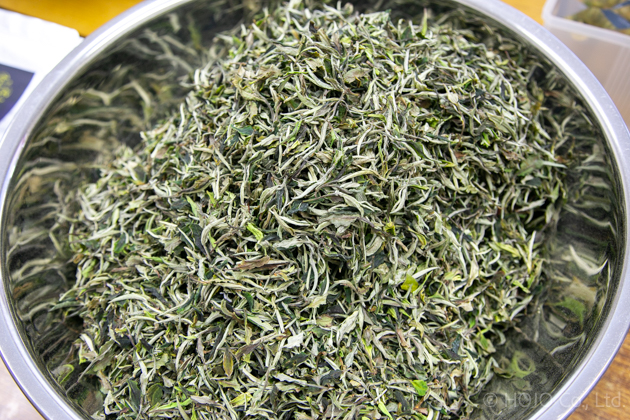
We have released two white teas produced by us in Yunnan in 2026: Ancient White Tea 2026 and Ancient Bai Mu Dan 2026.
Compared with an average year, this year’s white teas have richer flavor and stronger sweetness.
Why Does White Tea Have Such a Strong Floral Flavor?
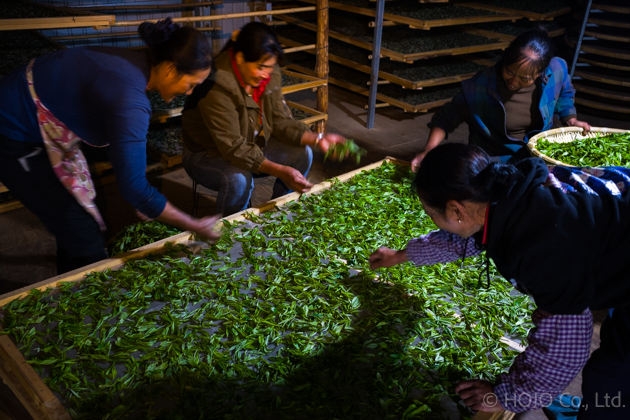
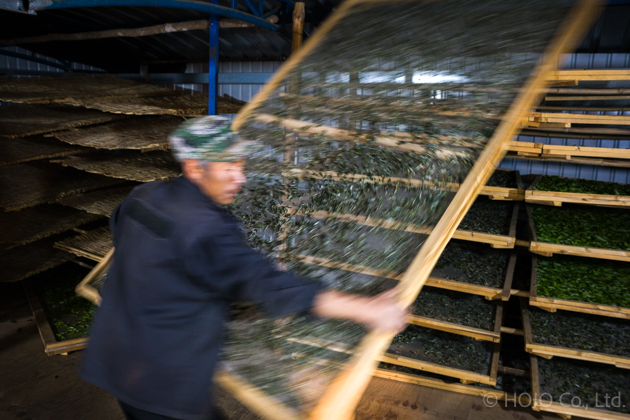
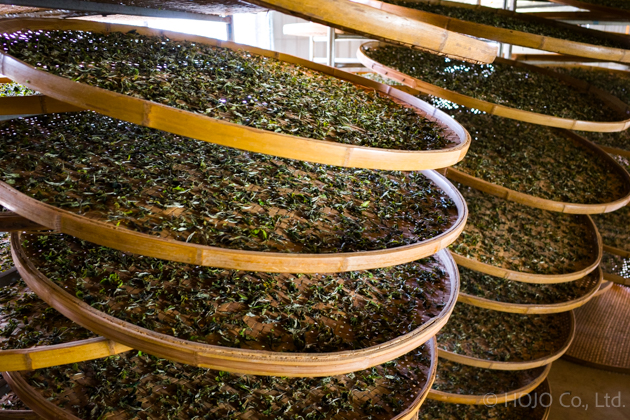
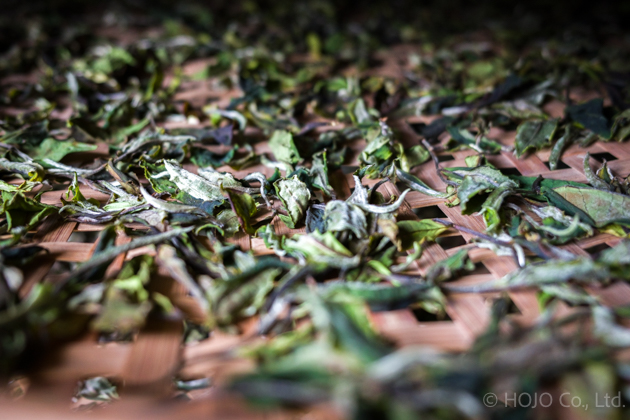
White tea is produced using a very simple process. The fresh tea leaves are neither rolled nor pan-fired, but are slowly withered and dried.
During the withering process, the tea leaves gradually lose moisture, activating the enzymes responsible for floral flavor formation, known as terpene glycoside hydrolases. As a result, floral compounds such as linalool and geraniol are released, developing the characteristic floral flavor of white tea.
Unlike black tea, however, white tea is not rolled, so the cells remain largely intact. As a result, enzymatic oxidation by polyphenol oxidase (PPO) does not proceed to the same extent as in black tea. Therefore, the floral flavor developed during withering remains very pronounced.
However, if the withering conditions are not properly managed, the oxidation reaction proceeds further than intended. The leaves become brown, resembling black fungus, and the original floral flavor is lost.
Raw Materials Determine the Quality of White Tea
Because white tea production relies on a relatively simple process that involves neither physical manipulation of the leaves nor heat treatment, its flavor depends greatly on the quality of the fresh tea leaves. No matter how skilled the tea maker is, it is impossible to produce high-quality white tea without excellent raw materials.
I often hear comments from people who have tried commercially available white tea, such as, “It is not bad, but I don’t know what I am supposed to enjoy,” or “It has a powdery smell.” To me, this is not the character that white tea is meant to have. White tea made from tea grown in fertilized tea gardens often has a weak flavor and can literally taste like dried hay.
Although a large proportion of the white tea on the world market is produced in Fujian Province, we purposely produce our white tea in Yunnan, placing the highest priority on the quality of the raw materials.
Every year, we spend around one and a half months in Yunnan, carefully selecting naturally cultivated tea grown above 2,000 m above sea level from tea trees that are several hundred years old and cultivated without fertilizers or pesticides.
Although Yunnan produces exceptionally high-quality tea leaves, its white tea processing techniques are generally not as refined as those in Fujian. For this reason, we stay at the production site throughout the manufacturing season, taking part in the manufacturing process and directly managing the entire process from the fresh leaves to the finished product. By combining Yunnan’s outstanding raw materials with our production management, we produce white tea of exceptionally high quality with a long aftertaste and rich floral flavor.
Why Is White Tea Called “White Tea”?
White tea is named after the fine white hairs that cover the young buds. When white tea is properly processed, the leaves retain their natural color, allowing the white hairs on the buds to stand out clearly.
The whitest-looking white teas are those made entirely from single buds, such as Bai Hao Yin Zhen and Gushu Yinzhen. Next is Bai Mu Dan, which is plucked as one bud and one leaf and also has a white to silvery appearance. In other words, the higher the proportion of buds in the finished tea, the whiter it appears and the closer it is to the image that most people associate with white tea.
In contrast, Ancient White Tea is plucked as one bud with two or three leaves. Because it contains a higher proportion of leaves, it appears greener rather than white.
However, in white tea, neither the whiteness of its appearance nor its higher price is necessarily related to the richness of its flavor.
So why do different types of white tea vary so much in price?
White Tea Is Not Defined by Its Appearance or Price
The price of white tea is determined mainly by the amount paid for the labor required for plucking. Teas that require more time and labor to pluck are more expensive.
For example, Bai Hao Yin Zhen is made by plucking only single buds while they are still very small. As a result, one person can harvest only about 400 g of fresh leaves per day, which yields approximately 100 g of finished tea after processing and drying. In other words, producing 100 g of Bai Hao Yin Zhen requires one person to spend an entire day plucking tea.
Likewise, Bai Mu Dan is plucked as one bud and one leaf. Its harvesting efficiency is lower than that of white teas plucked as one bud with two or three leaves.
On the other hand, it is the leaves, rather than the buds, that contain most of the flavor compounds. For this reason, oolong tea, where flavor is particularly important, is usually plucked with three to four leaves. Standard black tea is typically plucked as one bud and two leaves. There are also special types of black tea made entirely from buds.
In general, teas with a higher proportion of leaves tend to have more pronounced flavor, while teas with a higher proportion of buds tend to have a smoother and creamier mouthfeel.
For this reason, the quality of white tea cannot be judged simply by its white appearance or its price. Each type of white tea has its own characteristics. If you prefer a more flavorful tea, choose one with a higher proportion of leaves. If you prefer a softer and creamier mouthfeel, choose one with a higher proportion of buds.
Ancient Bai Mu Dan
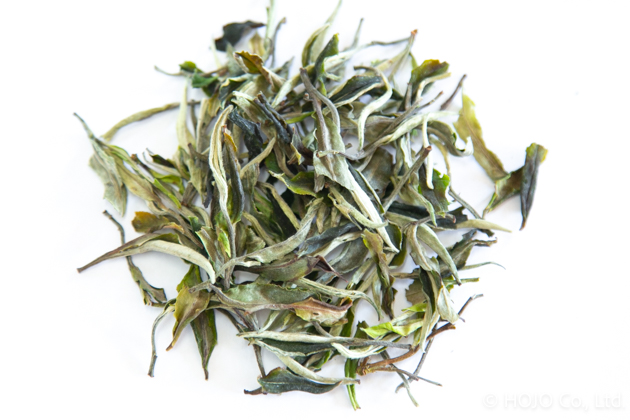
This white tea is plucked mainly as one bud and one leaf, resulting in a very high proportion of buds.
The tea leaves are sourced from naturally cultivated tea gardens located at elevations of 2,000 to 2,300 m above sea level. The tea trees are approximately 100 to 300 years old and are grown without fertilizers or pesticides.
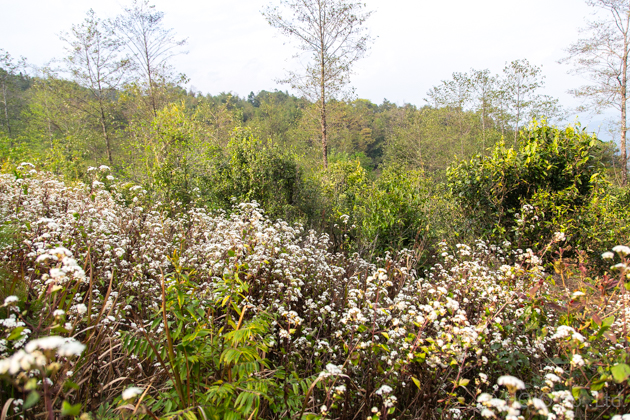
Around half of the leaves used for Ancient Bai Mu Dan 2026 come from what are known as Ye Fang tea gardens, which have been left completely untouched by human intervention.
This year, in Zhenkang County, we discovered a Ye Fang tea garden that had been left unharvested for decades. Because it had not been managed at all, wild vegetation, including thorny raspberry bushes, had completely overgrown the tea garden, turning it into a dense thicket.
The use of these tea leaves has given this year’s Ancient Bai Mu Dan exceptionally clear flavor and a refreshing character compared with previous vintages.
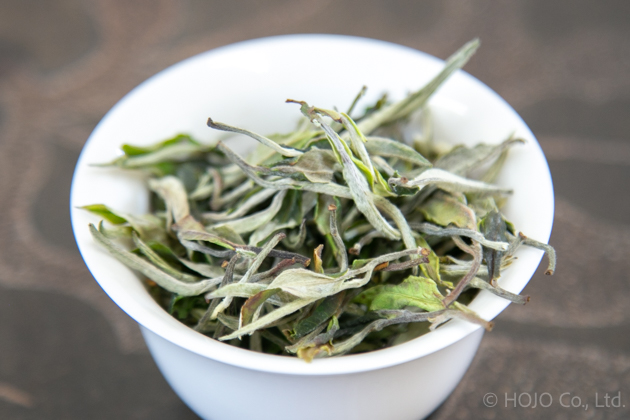
Ancient White Tea
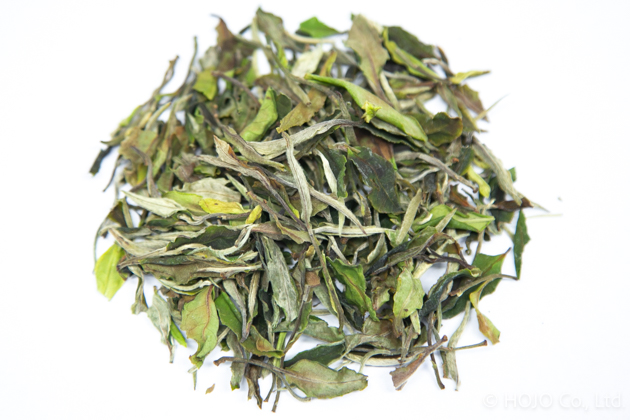
This white tea is plucked mainly as one bud with two to three leaves to maximize its floral flavor.
Ancient White Tea is our signature white tea and has been enjoyed by many customers for many years.
The tea leaves are sourced from naturally cultivated tea gardens located at elevations of 2,000 to 2,300 m above sea level. The tea trees are approximately 100 to 300 years old and are grown without fertilizers or pesticides.
Because slowly grown tea leaves develop a higher cell density, tea made from them has richer flavor and a longer aftertaste.
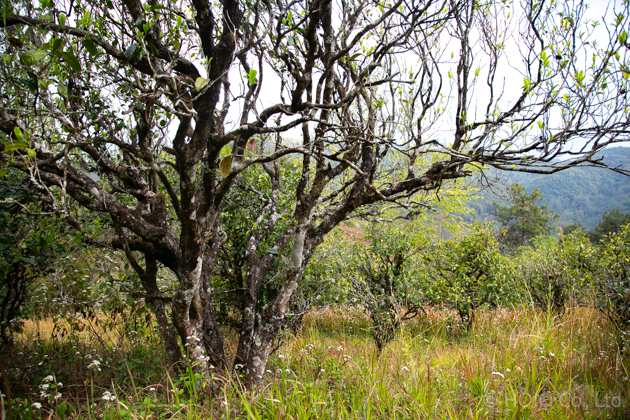
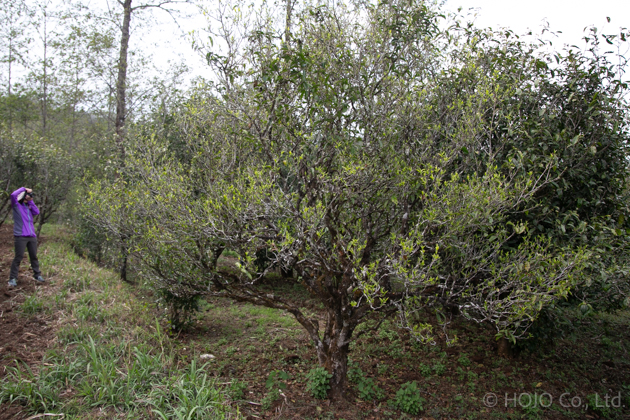
Ancient White Tea is plucked from old tea trees like the one shown in the photograph above.
Various Ways to Enjoy Ancient White Tea and Ancient Bai Mu Dan
Both Ancient Bai Mu Dan and Ancient White Tea can be enjoyed in a variety of ways.
When brewed with hot water, the various enzymes remaining in the tea leaves continue to work during successive infusions, gradually changing the character of the tea. The first and second infusions are highly floral, but with each additional infusion, the flavor gradually develops sweeter fruit-like notes, allowing you to enjoy a different character from one infusion to the next.
You may wonder whether enzymes are deactivated by hot water. In fact, although the surface of the leaves is quickly heated, the center of the thicker stems takes much longer to reach the same temperature. As a result, enzymatic reactions continue for some time, causing the flavor to change over successive infusions.
Cold brewing is one of the best ways to appreciate the unique character of white tea. Because the low temperature does not activate the enzymes in the tea leaves, the tea retains its original fresh character without enzymatic intervention. As a result, refreshing flavors reminiscent of flowers, grapes, and perilla leaves can be enjoyed.
For home preparation, steep 5 g of tea leaves in approximately 2 L of cold water for half a day to overnight in the refrigerator. If you would like to impress your guests at a tea gathering, use 5 g of tea leaves with 500 ml of cold water to produce a much more concentrated flavor.
For the best results, we recommend using previously boiled and cooled water rather than fresh tap water, as it brings out the flavor more clearly.
Another increasingly popular way to enjoy white tea is to carbonate cold-brewed white tea using a home sparkling water maker. Sparkling white tea is surprisingly delicious, with a refreshing champagne-like character, a long lingering aftertaste, and excellent compatibility with food.
White tea is also well suited for long-term aging in an oxygen-free environment. After about three years, the changes become much more noticeable. In addition to the fresh floral flavor of newly produced white tea, rich fruit-like flavors reminiscent of grapes, tropical fruits, and honey gradually develop. Aging in the presence of air accelerates these changes, but also produces sourness and undesirable flavors. For this reason, we recommend aging white tea unopened in an oxygen-free environment to achieve a clean and elegant fruit character.
How to Buy This Tea?
For international customers, please refer to the following page for pricing:
https://hojotea.com/img/tealineup10.pdf
Please send your inquiry to us via email at info2@hojotea.com.
For customers in Malaysia, Singapore, and Brunei, please click here to visit the product page.
- Please share with your friends
- Do you find our articles informative and useful? If yes, please kindly share it with your friends. We look forward to your opinion and comment as well.

Related Articles
How to get the latest update on HOJO?
1. Follow Twitter, 2. Click "Like" on Facebook, and 3. Subscribe in newsletter. You can have the latest tea news from HOJO.
 Subscribe the Newsletter to enjoy the privileges
- You may receive a free sample upon purchase, or you may have the priority to purchase special products. So please remember to subscribe our newsletter as well as the social network.
HOJO TEA Online Shop NEWS
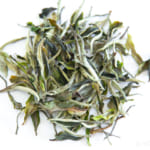
- Ancient White Tea 2026 and Ancient Bai Mu Dan 2026 Are Now Available
- We have released two white teas produced by us in Yunnan in 2026: Ancient White Tea 2026 and Ancient Bai Mu Da …
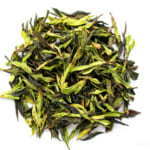
- Yong De Wild White Tea 2026 – Limited Release
- We have released Yong De Wild White Tea 2026. We can produce only a very limited quantity each year, and it us …
NEW ARTICLES
 Ancient White Tea 2026 and Ancient Bai Mu Dan 2026 Are Now Available
- We have released two white teas produced by us in Yunnan in 2026: Ancient White Tea 2026 and Ancient Bai Mu Da …
 Yong De Wild White Tea 2026 – Limited Release
- We have released Yong De Wild White Tea 2026. We can produce only a very limited quantity each year, and it us …
 New Release: High Mountain White Tea 2026
- We have released 2026 High Mountain White Tea, one of our popular white teas. This white tea is made from tea …
 New Release: Tsukigase Black Tea Benihikari
- We have released a black tea from Tsukigase, Nara Prefecture, made from the Benihikari cultivar grown without …
 New Release of Tsuge Woodfire Hojicha
- We have created a hojicha unlike conventional hojicha through our choice of raw materials, heat source, and ro …
 New Release: Da Xue Shan Wild Raw Pu-erh Tea 2026 Loose
- We have released the loose-leaf version of Da Xue Shan Wild Raw Pu-erh Tea. Loose-leaf wild tea is produced in …
 3 Types of Loose Leaf Ripe Pu-erh: One-Week Pre-Order Until 14th May
- We have been working with both raw and ripe pu-erh for more than 15 years. Over the years, our focus has been …
 Li Hua Lin Ancient Tree Raw Pu-erh Tea 2025 Loose Comparable to Single Tree Tea
- We have released Li Hua Lin Raw Pu-erh Tea 2025 Loose. This tea is made from material harvested from ancient t …
 Yunnan Field Report 2026: Climate Conditions and Tea Growth This Year
- We have been in Yunnan since March 28, and from the 29th, we have been producing and sourcing tea mainly in Yo …
 New Release of Huo Di Raw Pu-erh Tea Loose 2025
- We have released Huo Di Raw pu-erh tea 火地古樹生茶 Loose Leaf 2025. This tea is a raw pu-erh tea made from naturall …
Category
- New Arrival at HOJO Online Shop
- Featured Articles
- Newsletter
- Types of Tea
- Origin of Tea
- Teapot and Tea Equipment
- Tea Column
- How to enjoy tea
- Tea Processing
- How to choose quality tea
- Tea constituents and functional effect
- Safety of Tea
- Foods
- Tea Business Operation
- Hobby and Outdoor Activity
- Ranking of Tea
- Video
- FAQ
- Media Release
Profile

- AKIRA HOJO
- I invite you to experience my tea selections.I was born in Nagano, Japan. In university, I studied agricultural chemistry, and I have the master degree in food science. I worked in Japanese food industry for 10 years. I involved in R&D, QC and QA. As a factory manager, I implemented ISO9000 series and managed the factory.


Media Release
- The Art of Tea Magazine
- We posted the article on “The Art of Tea Magazine No.9, the magazine is published in Taiwan. We featured …

- New Straits Times
- The Malaysian National Newspaper, New Straits Times featured HOJO Tea on 17-Oct-2007.
Shop Info

Address:Lot No. T-215, 3rd Floor, The Gardens Mall, Mid Valley City, Lingkaran Syed Putra, 59200 Kuala Lumpur
Tel: +603-2287-4537
Business Hour: 10am to 10pm